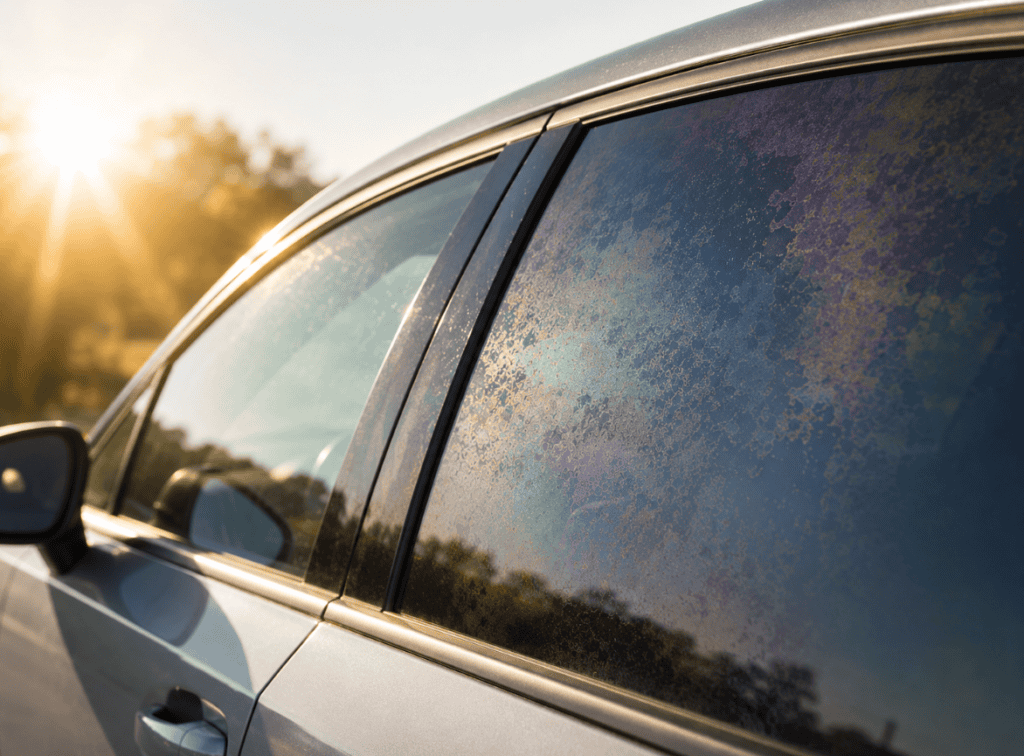
If you have ever gotten into a parked car on a hot San Jose afternoon, you know exactly how brutal the heat inside can get without car window tint. The steering wheel burns your hands, the seat scorches through your clothes, and the air feels like an oven. A lot of that heat comes directly through your windows. Standard car glass does almost nothing to stop solar heat or UV radiation from pouring into your vehicle. That is where window tint comes in, and the numbers on how much it can block might surprise you.
Thank you for reading this post, don't forget to subscribe!
This is one of the most common questions people ask when they start looking into automotive window tinting: how much does tint actually do? The answer depends on the type of film you choose, and there is a real difference between a basic dyed film and a premium ceramic product. This guide breaks down exactly what different films block, why it matters for your health and your car’s interior, and what to look for when you are ready to invest in quality window tinting services.
Understanding What Comes Through Your Car Windows
Before getting into the numbers, it helps to understand what you are actually blocking. Sunlight that hits your car windows carries three types of energy: visible light, infrared radiation, and ultraviolet radiation.
Visible light is what lets you see. You need enough of it to drive safely, and California tint laws set minimum requirements around how much visible light your windows must allow through. Infrared radiation is invisible, but it is the main source of the heat you feel building up inside your car. It passes through glass easily and warms everything it touches, from your dashboard to your skin. Ultraviolet radiation is the part of sunlight responsible for sunburn, skin damage, and the fading and cracking of your car’s interior surfaces. UV rays also pass through standard glass with very little resistance.
Standard untreated car glass blocks almost no infrared heat and only a small portion of UV radiation. The factory glass in most vehicles blocks roughly 30 to 40 percent of UV rays, which sounds okay until you realize that means 60 to 70 percent still gets through. Heat reduction window tint and UV protection window tint are specifically designed to address both of these problems at the same time.
How Much Heat Can Car Window Tint Actually Block
The heat-blocking performance of window film is measured by a value called Total Solar Energy Rejected, or TSER. This number represents the percentage of total solar energy that the film prevents from passing through the glass. A higher TSER means a cooler car interior.
Basic dyed window films, which are the most affordable option you will find at most San Jose tint shops, typically offer a TSER in the range of 35 to 45 percent. They reduce heat noticeably compared to bare glass, but they are not the strongest performers. Dyed films work primarily by absorbing solar energy rather than reflecting it, which means the film itself heats up and radiates some of that energy back into the car over time.
Metalized films perform better, typically achieving TSER values between 45 and 60 percent. These films use a layer of tiny metallic particles to reflect solar energy away from the glass rather than absorbing it. The reflection-based approach keeps the film cooler and delivers stronger heat rejection. The tradeoff is that metallic films can interfere with electronic signals including GPS, cell service, and satellite radio.
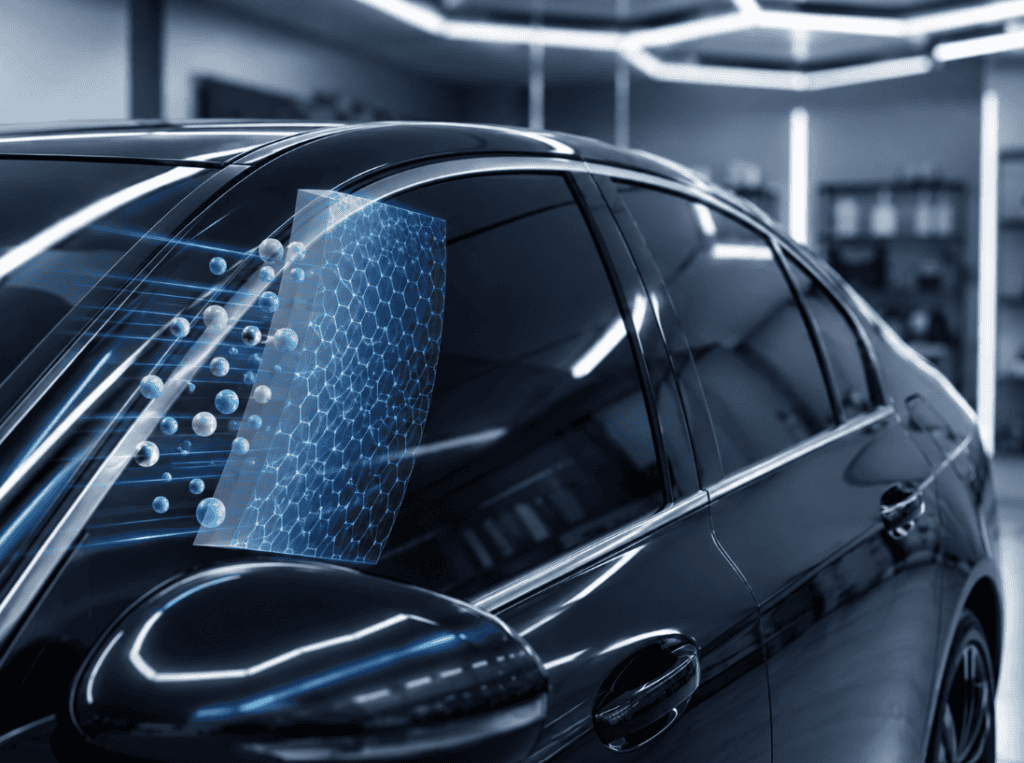
Ceramic window film is where heat rejection performance reaches its highest level. Quality ceramic films from top window tint specialists in San Jose can achieve TSER values of 60 to 80 percent or higher. These films use nano-ceramic particles that reflect and absorb infrared radiation without any metallic layer. They do not interfere with electronics, they do not fade or change color over time, and they maintain strong performance for years. If you are looking for premium vehicle window tinting near me that delivers the best possible heat reduction, ceramic film is the clear answer.
To put those numbers into practical terms, a car with no tint sitting in direct California sun can reach interior temperatures of 130 to 170 degrees Fahrenheit on a hot day. A ceramic tinted car in the same conditions can see interior temperatures that are 30 to 50 degrees lower. That difference is felt the moment you open the door.
Here is how the main film types compare on heat rejection:
- Basic dyed film: blocks roughly 35 to 45 percent of solar heat
- Carbon film: blocks approximately 40 to 55 percent of solar heat
- Metalized film: blocks approximately 45 to 60 percent of solar heat
- Ceramic film: blocks up to 60 to 80 percent of solar heat depending on the product
How Much UV Radiation Does Window Tint Block
This is where window film really shines across all film types. Even entry-level window tinting services provide strong UV protection compared to bare glass. Most quality window films, regardless of type, block 99 percent or more of ultraviolet radiation. That includes both UVA and UVB rays, which are the two types most responsible for skin damage and interior fading.
To put that in context, the Skin Cancer Foundation has recognized window film as a valid sun protection measure for exactly this reason. Driving without tinted windows exposes you to UV radiation every day, and for people who spend a lot of time behind the wheel, that adds up to real cumulative skin damage over time. The left side of a driver’s face and left arm receive significantly more UV exposure than the right side in countries where driving is on the right side of the road. Window film addresses this directly.
UV protection window tint does not just protect your skin. It also protects your car’s interior. Leather seats, dashboard surfaces, door panels, and carpeting all fade and crack faster when exposed to unfiltered UV rays. A car with good UV protection window tint installed will have a noticeably better-looking interior after five or ten years compared to an untreated vehicle. That has a real impact on resale value.
For San Jose drivers who spend time in traffic on 101, 280, or surface streets in warm weather, UV protection is not a luxury. It is a practical reason to get professional window tinting done sooner rather than later.
Here is what quality UV protection window tint does for your vehicle:
- Blocks up to 99 percent of UVA and UVB radiation through side and rear windows
- Reduces the rate of fading and cracking on leather, vinyl, and plastic interior surfaces
- Lowers cumulative UV exposure for drivers and passengers on daily commutes
- Protects child passengers who are especially sensitive to UV radiation
- Helps maintain interior condition and supports higher resale value over time
Choosing the Right Film for Your Car
Now that you know what different films can do, the question is which one makes sense for your situation. The answer depends on your budget, your priorities, and how long you plan to keep the vehicle.
If your main goal is basic heat reduction and UV protection at an affordable price, a quality dyed or carbon film from a reputable San Jose tint shop will do the job. Look for a film with a TSER of at least 40 percent and UV rejection of 99 percent. These are reasonable benchmarks for entry-level performance and are widely available through custom window tinting services in the area.
If you want the best performance and plan to keep your car for many years, ceramic film is worth the extra investment. The heat rejection is stronger, the UV blocking is the same, the clarity is better, and the film does not fade or turn purple over time the way dyed films can. You also get the benefit of no signal interference, which matters more every year as cars become more connected.
California tint laws also play a role in your choices. Front side windows must allow 70 percent or more of light through, which limits how dark you can go on those panels. Rear windows and the back glass have no darkness restrictions as long as the vehicle has dual side mirrors. A knowledgeable tint installer will help you choose films that deliver strong heat rejection and UV protection while staying within legal limits.
Dr. Tint California Window Tinting offers a full range of film options for every budget and every goal. As the best window tinting in San Jose, the team uses premium products from trusted manufacturers and handles everything from custom automotive window tinting services for individual vehicles to residential and commercial window film for homes and businesses across the area. Whether you want affordable car window tinting in San Jose or the highest-performing ceramic film available, the right product and a clean professional install make all the difference.
Car window tint does a lot more than change the look of your vehicle. It blocks a real and measurable amount of solar heat, protects you and your passengers from UV radiation every day, and keeps your interior looking better for longer. The exact numbers depend on the film you choose, but even a basic quality install delivers performance that bare glass simply cannot match. When you are ready to explore your options, the top rated window tint San Jose team at Dr. Tint is ready to help you find the right fit.
Related Post