A lot of people are curious about what actually happens during a window tint installation. You drop off your car, or a technician comes to your home or business, and a few hours later the windows look completely different. But what goes on in between? The process is more involved than most people expect, and understanding each step helps explain why professional window tinting services produce results that last for years while DIY attempts often fail within months.
Thank you for reading this post, don't forget to subscribe!Whether you are considering San Jose automotive window tint for your vehicle, residential window tinting for your home, or commercial window tinting for a business, the installation process follows the same core principles. Glass preparation, precise film cutting, careful application, and proper finishing all play a role in how well the film bonds and how long it holds up. This guide walks through the entire process from start to finish so you know exactly what to expect.
Step One: Preparation Is Everything
The most important part of any window tint installation happens before a single piece of film is cut. Glass preparation is what separates a professional job from a poor one, and it is where most DIY installs go wrong. Any dust, dirt, grease, fingerprints, or adhesive residue left on the glass will get trapped between the film and the surface, creating bumps, weak spots, and areas where the adhesive will not bond correctly. This shows up immediately and only gets worse over time.
A professional installer starts by thoroughly cleaning the glass with an ammonia-free cleaning solution and a soft cloth or squeegee. The goal is to remove every trace of contamination from the surface without scratching the glass. For automotive window tinting, this includes cleaning the inside of the glass carefully, since the film is applied to the interior surface of the window on all side and rear windows. For residential and commercial applications, the same interior application method is standard.

After the initial cleaning, many professional installers do a second pass with a different solution to catch anything the first cleaning missed. On older vehicles or windows with a previous tint job, any remaining adhesive residue from the old film has to be fully removed before the new film goes on. Even a thin layer of old adhesive will prevent the new film from bonding properly and cause problems that show up quickly after installation.
The edges and corners of the glass get special attention because these areas are the most likely places for film to lift later if they are not cleaned properly. A quality installer at any top rated window tint San Jose shop knows that cutting corners on prep work always shows up eventually, so every surface gets the same thorough treatment regardless of how long it takes.
Here is what the preparation process covers on every professional installation:
- Full cleaning of the glass surface with ammonia-free solution to remove dust, grease, and fingerprints
- A second cleaning pass to catch any contamination missed in the first round
- Complete removal of any adhesive residue from previous film or stickers
- Careful attention to edges and corners where lifting most commonly begins
- A final inspection of the glass surface before any film is applied
Step Two: Measuring, Cutting, and Shrinking the Film
Once the glass is clean, the next step is preparing the film itself. Window film does not come pre-cut in the exact shapes needed for every window. It comes in large rolls, and the installer cuts each piece to fit the specific dimensions of each window being treated. For flat glass like home and commercial windows, this is a matter of measuring and cutting to size with clean, straight edges.
For curved automotive glass, the process is more involved. Car windows are not flat. They have varying degrees of curve, especially rear windows, which can be quite complex in shape. To get the film to lie flat against a curved surface without wrinkles or fingers, a process called heat shrinking is used. The installer holds the film on the outside of the glass and uses a heat gun to warm it in sections while smoothing it with a squeegee. The heat makes the film pliable, and the squeegee shapes it to match the curve of the glass. This shrinking process is what allows the film to fit precisely without gaps, bubbles, or distortion.
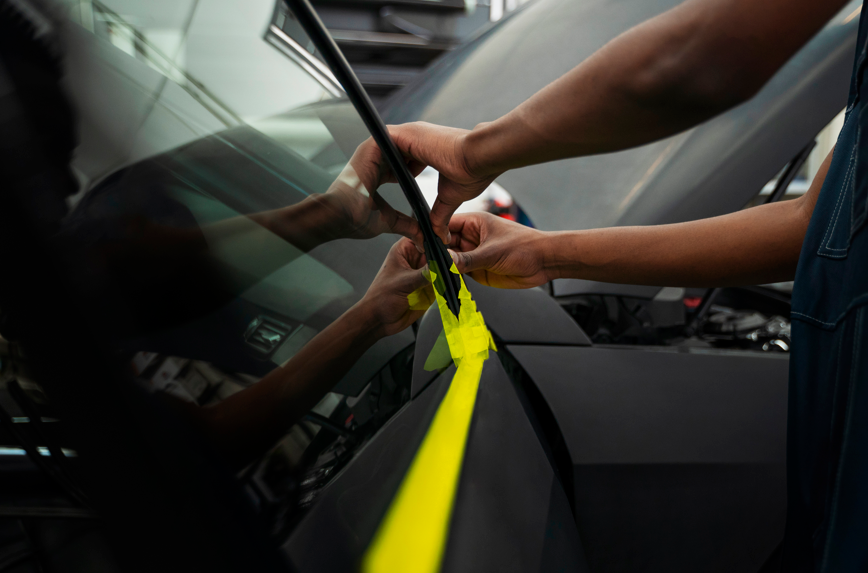
Getting the shrink right takes experience and a trained eye. Too much heat in one spot can stretch the film unevenly. Too little and the film will not conform to the glass curve properly. Top window tint specialists in San Jose develop this skill through repetition across many different vehicle types and window shapes. A well-shrunk piece of film on a rear window with a complex curve is one of the clearest signs of professional quality work.
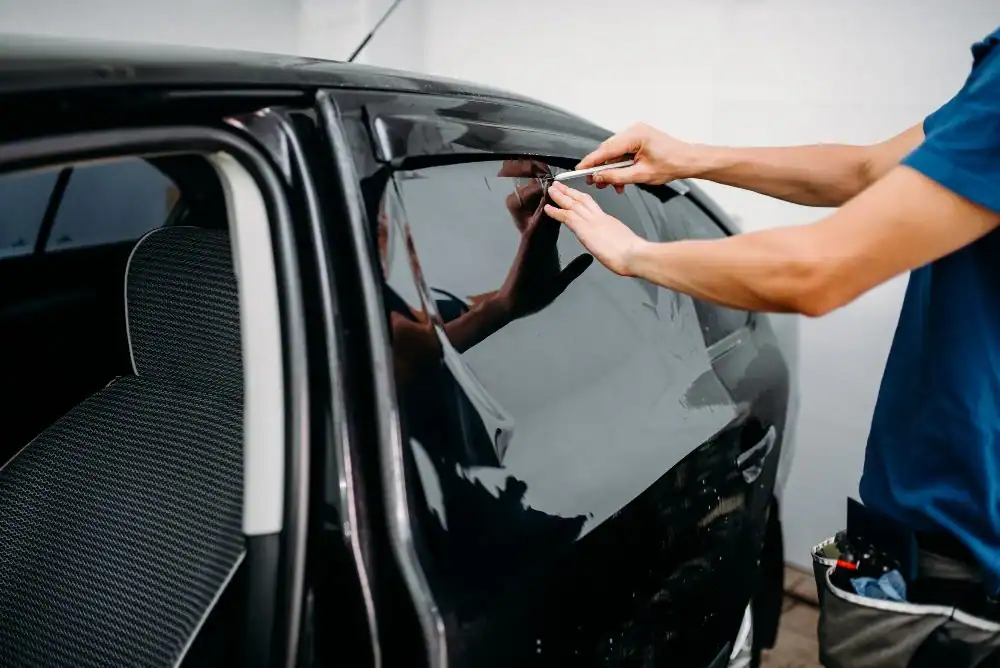
After shrinking, the film is trimmed to its final size with a precision blade, leaving a small, even gap around the perimeter of the glass. This gap is necessary because the film cannot extend all the way into the rubber seal without bunching up. A consistent, small gap all the way around is the mark of precise cutting. Uneven gaps or sections where the film extends too close or too far from the edge are signs of rushed cutting.
Step Three: Applying the Film to the Glass
With the film cut and shaped, the application process begins. The installer wets the cleaned interior glass surface with a slip solution, which is typically a very diluted soap and water mixture. This slip solution serves two purposes. It prevents the adhesive from bonding immediately to the glass, which gives the installer time to position the film correctly, and it allows the film to be repositioned slightly if the initial placement is off.
The liner is peeled away from the adhesive side of the film, exposing the sticky surface. The film is then placed against the wet glass with the adhesive side down. At this stage, the film can still be shifted slightly to align it perfectly before the slip solution is squeegeed out.
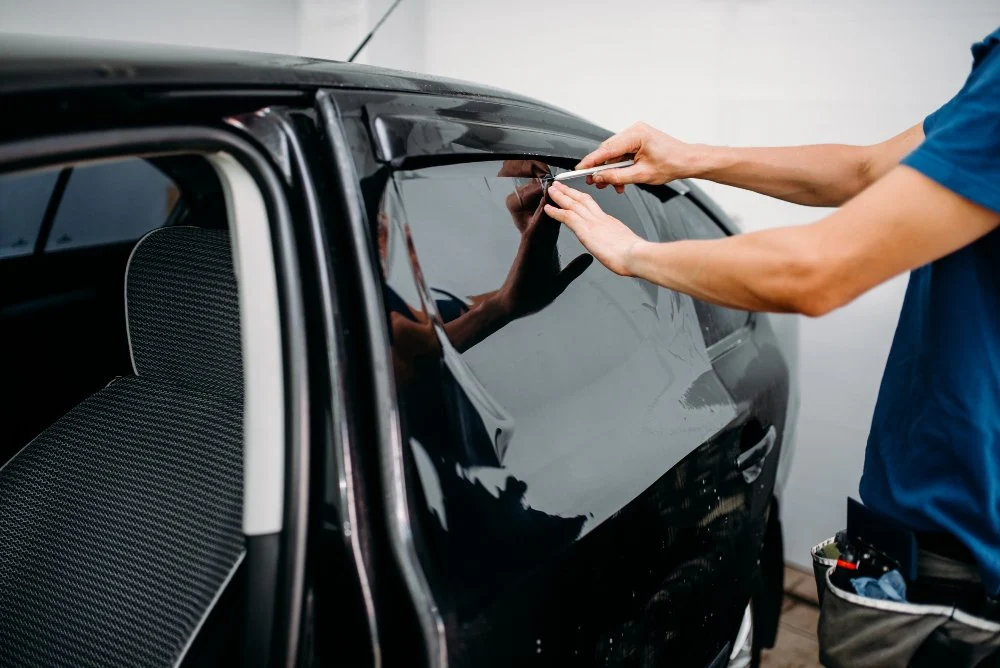
Once the film is positioned correctly, the installer uses a hard squeegee to push the slip solution out from between the film and the glass. This is done in firm, overlapping strokes starting from the center and working outward toward the edges. Every bit of solution that gets squeegeed out brings the adhesive into closer contact with the glass, which starts the bonding process. Air is also pushed out at the same time. A thorough squeegee pass leaves no moisture or air pockets behind.
The edges and corners require extra care during this stage. The installer works carefully around the perimeter to push any remaining solution out from under the film without lifting the edges. A detail squeegee or a stiff card is often used for tight corners and the very edge of the film where a larger tool cannot reach. This attention to the edges at the application stage is what determines whether the film holds cleanly or starts lifting within the first few months.
Here is what the application process involves step by step:
- Wetting the interior glass surface with a slip solution to allow film positioning
- Peeling the liner from the adhesive side of the film and placing it against the glass
- Positioning the film precisely before the slip solution is removed
- Squeegeeing from center outward in firm, overlapping strokes to push out moisture and air
- Working carefully at edges and corners with a detail tool to seal the film perimeter
- A final inspection pass to check for any trapped moisture, air, or misalignment
Step Four: Finishing and What Happens After
After the film is applied and the initial squeegee work is done, the installer does a final inspection of every window. They look at the glass from multiple angles in good lighting to check for any remaining water pockets, uneven areas, debris under the film, or edge lifting. Small issues caught at this stage can often be addressed immediately. Larger problems mean the film needs to come off and the process starts over, which rarely happens with an experienced installer who prepared the glass properly to begin with.
The vehicle or property is then typically ready within a few hours, but the film itself is not fully bonded yet. The adhesive cures over the following days and weeks as the remaining moisture works its way out. This is why some temporary water pockets or slight haziness visible right after installation are normal and not a cause for concern. In San Jose’s warm climate, the curing process moves quickly, and most film is fully set within one to three weeks.
For automotive window tinting, car owners are advised to keep windows rolled up for at least three to five days after installation so the film edges are not disturbed before the adhesive has cured. For home and commercial window film, cleaning should wait at least three days to avoid interfering with the bonding process.
Dr. Tint California Window Tinting follows this full process on every installation, from the first cleaning pass through the final inspection. As the best window tinting in San Jose, every step is done with care because the prep work, the cutting, the application, and the finishing all contribute to how the film looks and how long it lasts. Whether you need custom automotive window tinting services for your vehicle, professional residential window tint installation for your home, or energy efficient commercial window tinting for your business, a proper installation makes the difference between film that lasts a decade and film that fails in a year. The process is worth doing right from the start.
Related Post