My neighbor just bought a brand new Tesla and was showing it off in the driveway. Beautiful white paint, looked absolutely perfect. Two weeks later I see him outside staring at the front bumper looking frustrated. Rock chip from highway driving. Then another one. Then a scratch from a shopping cart in a parking lot. Three weeks old and his perfect new car already had damage.
Thank you for reading this post, don't forget to subscribe!He finally got paint protection film in San Jose installed on the front end, bumper, hood, mirrors, and door edges. Said he wished he’d done it before driving off the lot. Now when rocks hit or someone dings a door, the film takes the damage instead of his paint. Small investment compared to what he’s already spent on touch-up paint trying to fix those early chips.
That’s what paint protection film does – it’s invisible armor for your car’s paint that absorbs damage so your actual paint stays perfect.
What Paint Protection Film Actually Is
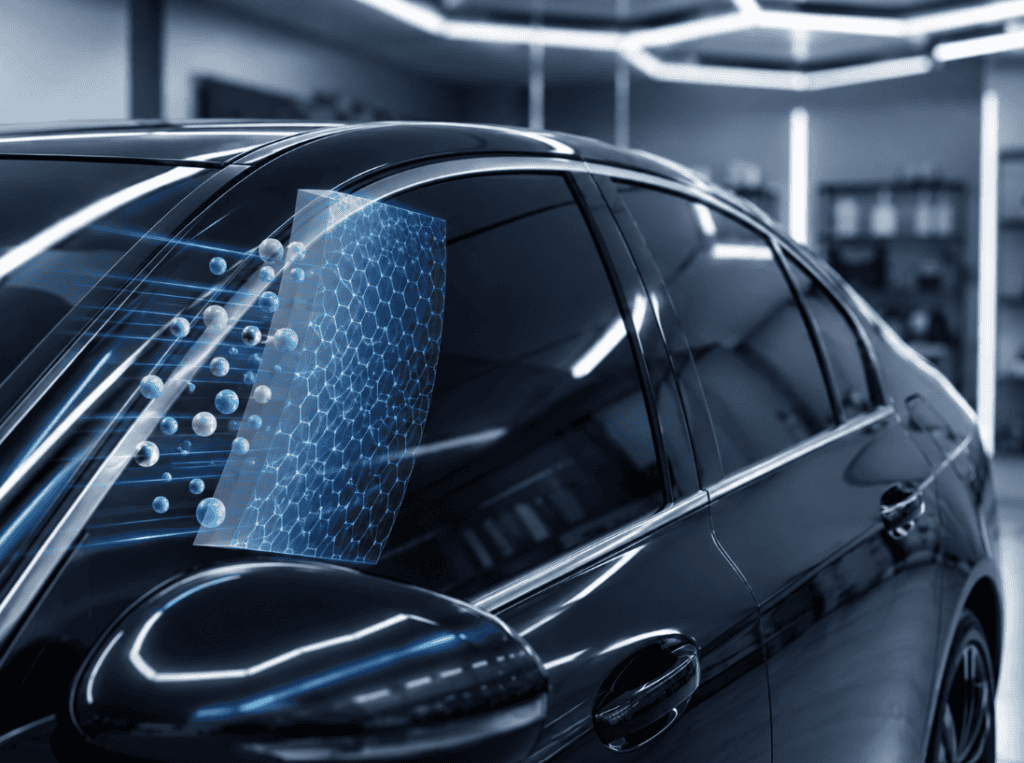
Paint protection film, also called PPF or clear bra, is a thick clear urethane film applied to your car’s painted surfaces. Think of it like a heavy-duty screen protector for your phone, except for your car’s paint.
The film is thick – typically 6 to 10 mils – way thicker than window tint. That thickness gives it impact resistance and self-healing properties.
Self-healing means minor scratches and swirl marks disappear with heat. Park in the sun or run warm water over a scratch and it vanishes as the film’s top layer flows back together. It’s almost like magic watching scratches fade away.
The film is optically clear when properly installed. You don’t see it unless you’re looking for the edges. Maintains your car’s original appearance while providing protection.
Modern PPF has advanced dramatically. Early versions yellowed over time and had visible texture. Current generation films stay crystal clear for years and are virtually undetectable.
The film protects against rock chips, scratches, bug splatter, bird droppings, minor abrasions, and environmental contaminants that damage paint.
It won’t protect against major impacts or collisions. A serious accident will damage the film and probably the paint underneath. But for everyday driving hazards, PPF prevents the gradual damage that destroys paint over time.
Installation involves meticulously cleaning the paint, cutting film to fit your car’s specific panels, applying it wet, and carefully squeegeeing out all air and water. Professional installation is critical because poor installation shows as bubbles, edges, or orange peel texture.
The film bonds to the paint but can be removed later without damage if done properly. So if you want to change colors or sell the car, the PPF comes off revealing protected original paint underneath.
Clear Bra Installation for Front End Protection
Clear bra installation traditionally focuses on the front end of the car because that’s where most road damage occurs. Hood, front bumper, fenders, mirrors – areas that catch rocks and debris from the road.
Highway driving pelts your front end with tiny rocks constantly. Every pebble kicked up by the car ahead is a potential paint chip. Over months and years, the front end gets sandblasted by road debris.
I drive 101 to work every day and the amount of rocks and debris on the highway is insane. Before PPF on my truck, I’d get new chips every few weeks. After installing clear bra on the front, rocks still hit but the film takes it instead of the paint.
Full front coverage includes hood, full front bumper, fenders, and side mirrors. This protects the areas most vulnerable to rock chips and road debris.
Partial front coverage saves money by protecting just the most critical areas – usually front bumper, leading edge of hood, and mirror caps. Provides good protection for less cost than full coverage.
Some people add headlight protection film too. Headlights are expensive to replace and rock chips can crack or pit the lenses. Clear film protects them.
Fog light protection makes sense if your car has expensive fog lights mounted low where they catch a lot of debris.
A-pillar coverage protects the painted pillars on either side of the windshield. These areas get sandblasted on highways and show damage over time.
Rocker panels along the bottom of the car catch road debris and salt. PPF here prevents rust-causing damage from rocks and road chemicals.
The installation process for front end coverage takes several hours. The car needs to be perfectly clean. Every panel gets precisely cut film applied carefully to follow body lines.
Professional installers either use pre-cut patterns for your specific car model or hand-cut film on the car. Pre-cut is faster and cleaner. Hand-cut allows custom coverage but requires more skill.
Full Car Paint Protection Film
Full car PPF means covering every painted surface – hood, fenders, doors, roof, trunk, bumpers, everything. Maximum protection but obviously more expensive.
People who buy high-end cars often do full PPF. When you’re spending $80k or more on a car, spending another $6-8k to protect the paint makes sense.
A guy I know bought a Porsche 911 and did full PPF before even driving it. Every inch of paint protected from day one. Five years later, the paint under the film still looks showroom perfect.
Full coverage protects against door dings in parking lots, shopping cart scratches, careless people leaning on your car, automated car washes that scratch paint.
The resale value argument is strong for full PPF. When you sell the car, you can remove the film to reveal pristine original paint. Or leave it on as a selling point – buyer gets a protected car.
Lease vehicles benefit from full PPF. Avoid end-of-lease damage fees by protecting paint from day one. The film cost might be less than damage charges you’d face returning a beat-up lease.
The installation process for full car coverage takes 1-2 days typically. Every panel must be removed, cleaned, filmed, and reinstalled precisely.
Color change PPF is a thing too. Instead of clear film, you apply colored film to change your car’s appearance while protecting the paint. Remove it later to reveal original color.
I’ve seen cars wrapped in matte PPF over glossy paint, or colored PPF completely changing the car’s look. Protection plus customization.
Full PPF isn’t cheap but for expensive cars or people who keep cars long-term, it’s insurance against paint damage that would cost way more to repair.
Vehicle Paint Protection Film for High-Impact Areas
Beyond full coverage, strategic vehicle paint protection film placement protects high-damage areas for reasonable cost.
Door edges get dinged constantly from careless opening in tight parking spaces. Small strips of PPF on door edges prevent paint chips from hitting adjacent cars or poles.
Door cups where you grab to open doors get scratched by rings, keys, and fingernails. PPF in these areas keeps them looking new.
Rear bumper loading areas on SUVs and hatchbacks get scratched from loading groceries, luggage, equipment. PPF here prevents damage from daily use.
My wife’s SUV has PPF on the rear bumper top edge. After three years of loading kid sports equipment and groceries, the film shows wear but the paint underneath is perfect.
Rocker panels and lower doors get sandblasted from road debris and damaged by curbs and parking blocks. PPF protects these vulnerable low areas.
Behind wheel wells catches tons of debris kicked up by tires. PPF here prevents pitting and damage from rocks and road salt.
Trunk lips where you lift the trunk get scratched from loading and unloading. A strip of PPF prevents this common damage area.
Pillar areas behind doors catch rocks and debris. Protecting these areas prevents gradual sandblasting damage.
Gas cap areas get scratched from careless fueling. PPF around the gas door prevents scratches from the fuel nozzle.
Strategic placement based on your driving patterns makes sense. If you do lots of highway driving, focus on front end. If you mostly do city parking, focus on doors and bumpers.
Custom coverage designed for your specific needs and budget gives you protection where you actually need it without paying for full car coverage.
PPF Self-Healing Technology
Modern paint protection film has self-healing top coats that repair minor scratches and swirl marks automatically.
The self-healing layer responds to heat. When scratched, applying heat causes the urethane to flow back together, filling in and erasing the scratch.
Sunlight provides enough heat for minor scratches. Park your car in the sun and watch light scratches disappear over hours. It’s satisfying seeing damage vanish on its own.
For deeper scratches, you can speed healing with warm water or a heat gun. Pour warm water over a scratch and it fades within seconds. Heat gun application makes even stubborn scratches disappear.
There are limits obviously. Deep scratches that go through the self-healing layer won’t disappear. Major scrapes or cuts in the film need repair or replacement.
But the everyday light scratches and swirl marks from automatic car washes, brushing against bushes, or careless cleaning – those heal themselves without intervention.
I tested this on my truck’s PPF. Scratched it deliberately with a key (not deep, just surface scratches). Parked in the sun for a few hours. Scratches completely gone. The technology actually works.
Not all PPF has self-healing properties. Budget films might not include this feature. Premium films from brands like XPEL and 3M have excellent self-healing capabilities.
The self-healing property degrades over time. After 5-7 years, the film’s ability to heal might diminish. But during the film’s prime years, it’s incredibly effective at maintaining perfect appearance.
This technology means your car looks newer longer. No gradual accumulation of minor scratches making the paint look dull and worn. The film stays clear and scratch-free year after year.
Installation Process and Professional Requirements
Paint protection film installation requires serious expertise. This isn’t DIY territory for most people.
Surface preparation is absolutely critical. Paint must be perfectly clean and decontaminated. Any dirt, wax, or residue prevents proper adhesion.
Professional installers use clay bars, chemical decontamination, and multiple washing steps. Some even paint correct minor imperfections before applying film.
The installation environment matters. Clean, temperature-controlled space prevents contamination. Dust in the air settles on wet film and gets trapped forever.
Quality shops have dedicated PPF installation bays – clean rooms specifically for film application where contamination is minimized.
Film cutting happens either with pre-cut patterns or by hand. Pre-cut patterns are computer-designed for specific car makes and models. Installer orders the pattern, film comes pre-cut, just needs application.
Hand cutting involves laying film on the car and cutting to fit. Requires incredible skill to cut precisely without cutting into paint. Master installers can hand-cut complex curves and body lines perfectly.
Application uses wet installation technique. Installer sprays slip solution on paint and film, positions the film, then squeegees out all liquid and air while stretching and conforming film to body contours.
Compound curves like bumpers and fenders challenge even experienced installers. The film must stretch and conform without wrinkles or lifting edges.
Heat guns help stretch film around curves and into recesses. Too much heat damages film. Too little means the film won’t conform. Experience determines proper heat application.
Edge tucking hides film edges by wrapping them into panel gaps and body seams. Proper edge work makes the film nearly invisible.
Post-installation curing takes 24-48 hours. During this time, the adhesive bonds fully to the paint. No washing or exposure to weather during curing.
The whole process for full front end coverage takes 4-6 hours minimum. Full car coverage takes 16-24 hours spread across multiple days.
Choosing Quality PPF Brands and Installers
Not all paint protection film is equal. Brand and installer quality determine your results and satisfaction.
Top PPF brands include XPEL, 3M, SunTek, and Llumar. These companies have decades of development and proven track records.
XPEL Ultimate Plus is probably the industry gold standard. Excellent clarity, strong self-healing, great warranty, proven longevity.
3M Scotchgard Pro Series is another top-tier option. Great optical clarity and self-healing properties backed by 3M’s reputation.
SunTek Ultra and Llumar Valor are also quality films with good performance and warranties.
Budget films exist but often yellow, peel, or don’t have self-healing properties. Saving $500 on film only to have it fail in two years isn’t saving anything.
Installer certification matters. Major film manufacturers certify and train installers. Look for certified installers who’ve completed manufacturer training.
Experience counts enormously with PPF. This is skilled work requiring practice. An installer who’s done hundreds of cars will deliver better results than someone who does PPF occasionally.
Portfolio review shows their work quality. Ask to see photos of completed installations. Clean edges, proper alignment, no visible bubbles or orange peel – marks of quality work.
Check reviews specifically about PPF installation. “Perfect installation, can’t even see the edges” or “film has held up great for three years” – those are reviews you want.
Warranty matters. The film should have manufacturer warranty against yellowing, cracking, and delamination. Installation should have workmanship warranty covering bubbles, lifting, and poor adhesion.
Get detailed quotes in writing. What areas are covered? What brand of film? What’s included in the price? What’s the warranty?
Higher prices usually mean better film and more experienced installation. Cheap PPF is usually cheap for a reason.
Cost and ROI of Paint Protection Film
Paint protection film is expensive upfront but the ROI makes sense for many car owners.
Partial front coverage runs $800-1500 typically. Full front coverage is $1500-2500. Full car coverage can be $4000-8000 depending on the car size and film quality.
Expensive? Yes. But compare to paint repair costs. Repainting a hood costs $800-1200. Full front respray is $2000-4000. Paint correction to remove years of chips and scratches costs $500-1000.
One proper paint repair costs more than PPF that would have prevented the damage in the first place.
Resale value protection is hard to quantify but real. Pristine paint commands higher resale prices. Buyers pay more for cars with obvious care and maintenance.
Removing PPF at sale time reveals perfect protected paint underneath. It’s impressive pulling off 5-year-old film to show paint that looks brand new.
Lease return value is easier to calculate. End-of-lease damage fees for paint chips, scratches, and door dings can easily hit $1000-2000. PPF prevents those fees.
Peace of mind has value. Not stressing about rock chips on your new car, not worrying about parking lot dings, not cringing when someone opens their door near yours – that mental relief is worth something.
Time savings matter too. No time spent on paint touch-ups, no appointments for paint correction, no dealing with insurance for minor damage. The film handles it all.
For cars you’re keeping long-term, PPF pays for itself over 5-10 years through prevented repairs and maintained value.
For expensive or special cars where paint damage is particularly costly to repair, PPF makes financial sense immediately.
For daily drivers where you plan to trade in after 3-4 years, the math is closer but still often worthwhile depending on your driving conditions.
Maintaining Paint Protection Film
Paint protection film requires some maintenance to keep it looking perfect and performing well.
Regular washing is fine and encouraged. Keeping the film clean prevents contaminants from bonding to the surface.
Hand washing is gentler than automatic car washes. Touchless automatic washes are okay. Brush car washes can scratch the film though it’ll usually self-heal.
Avoid harsh chemicals and abrasive polishes. The film doesn’t need polishing and harsh chemicals can damage the self-healing layer.
Waxing PPF is optional but can help. Some people wax the film like they would paint. Others leave it bare. Both approaches work fine.
Ceramic coating over PPF is increasingly popular. Adds hydrophobic properties and makes the film easier to clean. Provides an extra layer of protection for the protective film itself.
Bug splatter and bird droppings should be cleaned quickly. These contaminants are acidic and can stain the film if left too long.
I keep detailing spray in my car and wipe bird droppings off immediately when I notice them. Quick wipe prevents any potential staining.
Minor damage to the film can often be repaired. Small tears or lifted edges can be resealed by installers without replacing entire panels.
Yellowing or haziness that develops over years indicates it’s time for film replacement. Quality film should stay clear for 7-10 years but eventually needs replacement.
Removing and replacing aged film is straightforward for professionals. The old film peels off and fresh film goes on, giving you another 7-10 years of protection.
Avoiding parking under trees that drop sap helps. Tree sap bonds to PPF and requires specific cleaners to remove. Easier to just park elsewhere.
Edge lifting can occur over time, especially in areas with extreme temperature swings. Have it checked annually and resealed if needed.
Paint Protection Film vs Other Options
Paint protection film isn’t the only way to protect paint, but it’s the most effective for impact and scratch protection.
Ceramic coating provides hydrophobic properties and chemical resistance but doesn’t prevent rock chips or scratches. It makes paint easier to clean and more resistant to etching but doesn’t absorb impacts.
Some people combine PPF with ceramic coating. Film for impact protection, coating for easier maintenance and chemical resistance. Best of both worlds.
Vinyl wraps protect paint while changing appearance but aren’t as thick as PPF and don’t have self-healing properties. Wraps are more about appearance than protection.
Traditional wax and sealants provide minimal protection. They make water bead and paint shine but do nothing against rock chips or scratches.
Regular paint correction and touch-ups address damage after it happens but don’t prevent it. You’re constantly playing catch-up instead of preventing damage.
The only real alternative to PPF for physical protection is accepting paint damage as inevitable and budgeting for periodic repaints. Some people take this approach.
But for most people wanting to maintain pristine paint, PPF is the only proactive solution that actually prevents damage before it happens.
Paint protection film in San Jose keeps your car looking new despite our highway rock chips, parking lot dings, and daily driving hazards. Whether you want full clear bra installation or strategic vehicle paint protection film on high-impact areas, quality PPF protects your investment.
My neighbor’s Tesla still looks perfect now with PPF installed. Rocks hit, doors occasionally swing too close, shopping carts brush by – the film takes all of it and his paint stays pristine.
If you care about keeping your car’s paint perfect, have an expensive or special car, or just hate seeing damage accumulate on a car you love, look into paint protection film. Work with certified experienced installers, choose quality film with good warranties, and protect your car before damage happens instead of fixing it after. Your future self will thank you when your car still looks new years from now.
Related Post