Getting your windows tinted is a smart move. It cuts heat, blocks UV rays, reduces glare, and adds privacy to your car or home. But not every tint job is created equal. Some installers rush the prep work, use low-quality film, or skip steps that matter. The result looks fine on day one but starts showing problems within weeks. Knowing how to check the quality of a tint installation yourself puts you in control, whether you are inspecting fresh work you just paid for or evaluating an older install on a car or home you recently purchased.
Thank you for reading this post, don't forget to subscribe!
This guide walks through exactly what a good tint job looks like, what the warning signs of a poor install are, and how to tell the difference between normal curing behavior and actual defects. If you are searching for “car window tinting near me” or “professional window tinting in San Jose”, this information will also help you know what questions to ask before you book.
What a Properly Done Tint Installation Actually Looks Like
A quality tint job has a clean, consistent appearance across every window. When you look at the glass from inside or outside the vehicle, or from inside a tinted room, the film should appear uniform in color and shade with no variation across the surface. There should be no visible lines, no patchy areas that look lighter or darker than the rest, and no spots where the film looks different from one section to another.
The edges are one of the most telling indicators of quality. On a car, the film should sit close to the edge of the glass with a very small, even gap along the perimeter. This gap exists because the film cannot extend all the way into the rubber seal without bunching up, but it should be consistent and barely noticeable. Gaps that are wide, uneven, or larger in some areas than others suggest the film was not cut precisely or was not applied with care. On home and commercial windows, the film should extend cleanly to the frame with no lifting, curling, or rough edges anywhere.
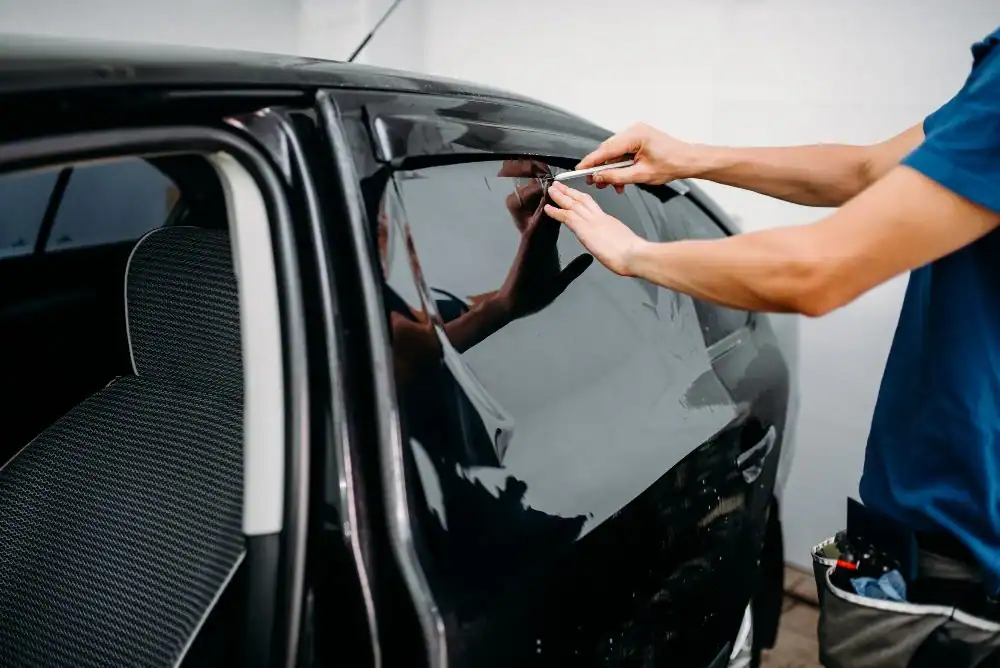
The surface of the film should feel smooth when you look at it carefully in good light. Tilt the glass slightly and look across the surface at an angle. A properly installed film will have a flat, even finish. You should not see any raised areas, bumps under the film, or debris trapped between the film and the glass. Contamination under the film is one of the most common signs of poor glass prep before installation.
Here is a quick checklist of what a properly installed tint job should show:
- Consistent color and shade with no light or dark patches across the glass
- Clean, even edges with a small uniform gap along the perimeter
- Smooth, flat surface with no bumps, raised spots, or debris trapped underneath
- No scratches, creases, or fold marks visible on the film surface
- Corners that sit flat and show no lifting or peeling
- Clarity through the film with no blurry or distorted sections
All of these characteristics apply whether you are looking at San Jose automotive window tint on a car door, residential window tinting on a home window, or protective window film installation on a commercial storefront. The standards for a good install are the same across all applications.
Normal Curing Behavior vs. Actual Defects
One of the most common sources of confusion after a fresh tint install is not knowing what is normal during the curing period and what is an actual problem. New window film goes through a curing phase that can last anywhere from a few days to a few weeks. During this time, the adhesive is still bonding to the glass, and some visual effects are completely expected.
Small water pockets are the most common thing people worry about right after installation. These appear as tiny bubbles or cloudy spots scattered across the film surface. They are caused by trapped moisture that is still working its way out from between the film and the glass as the adhesive cures. In warm California weather, they typically disappear within a week or two. They are not a defect, and pressing on them or trying to smooth them out can actually cause damage by disrupting the adhesive before it has finished bonding.
A very slight haziness or milky appearance across the entire film right after installation is also normal. This is part of the curing process and clears up as the film dries. It is different from the permanent cloudiness that comes from a bad install or from using ammonia-based cleaners on the film after it has cured.
What is not normal, even during the curing period, is large bubbles that have clearly defined edges and look like air is trapped underneath rather than moisture. These air bubbles do not go away on their own because they are caused by adhesive failure or contamination under the film, not by moisture. They appear as distinct raised pockets, often with a sharp outline, and they tend to grow larger over time rather than shrinking.
Here is how to tell the difference between normal curing and real problems:
- Small scattered hazy spots that are soft and move slightly: normal curing moisture
- A faint overall cloudiness across the whole film right after install: normal curing behavior
- Large clearly defined bubbles with hard edges that do not shrink over two to three weeks: adhesive failure or contamination
- Bubbles concentrated along the edges or corners: film was not pressed down properly during install
- Film that looks wavy or wrinkled in patches: the film was not cut or applied correctly
If you are past the two to four week curing window and still seeing bubbles, cloudiness, or separation, those are legitimate installation defects that should be addressed by the installer.
Signs of a Poor Quality Tint Job to Watch For
Beyond the curing period, there are specific signs that indicate a tint job was not done well from the start. Some appear quickly and others develop over months. Knowing what to look for helps you catch problems early and gives you the information you need to go back to the installer or choose a better one next time.
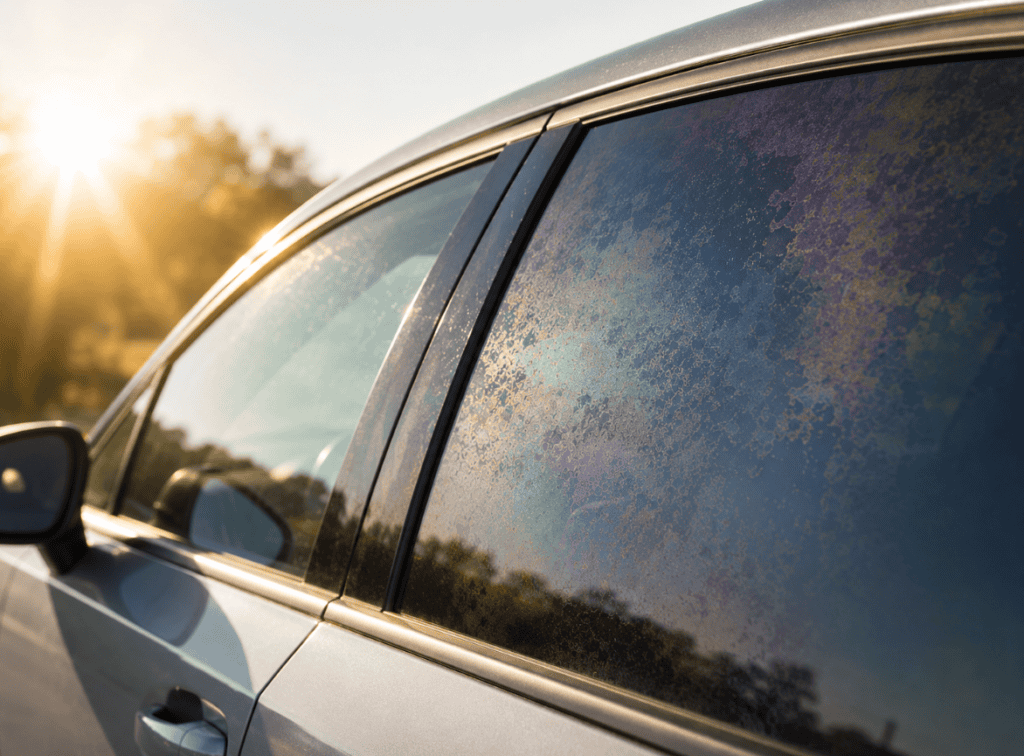
Debris or dirt under the film is one of the clearest signs of poor prep work. When the glass is not cleaned thoroughly before the film goes on, dust, lint, and fibers get trapped underneath the film and create tiny bumps across the surface. In direct sunlight or at a close angle, these bumps look like small white or dark specks distributed across the glass. A professional tint installation always starts with a detailed glass cleaning process to prevent this.
Film that starts peeling at the edges or corners within the first few months is a sign of either poor adhesion, incorrect application, or film that was cut too short. The edges of window film are the first place where lifting shows up, and it tends to get worse over time if not addressed. On automotive window tinting, this is often visible as a thin strip of lifted film along the bottom edge of a door window. On home or commercial film, it shows up at the corners of the glass.
Purple or brown discoloration on a film that was originally a neutral grey or charcoal color is a sign of low-quality dyed film. Basic dyed films use color to darken the glass rather than reflective or ceramic technology, and the dye breaks down over time from UV exposure. The California sun accelerates this process. Once a dyed film starts turning purple, there is no fixing it. The film needs to be removed and replaced. Investing in premium window tint from the start prevents this outcome entirely.
Visible scratches or crease marks on the surface of the film indicate that either the film was handled roughly during installation or the wrong tools were used during the process. A properly installed film should have a clean, scratch-free surface from day one.
Additional signs of a low-quality install include:
- Uneven darkness across different sections of the same window
- Visible lines or seams where pieces of film overlap or meet awkwardly
- Film that is clearly not the same shade as other windows on the same vehicle or building
- Gaps at the edges that vary widely from one part of the window to another
- Distortion or waviness in your view through the glass caused by poor film application
How to Protect Yourself and Get a Quality Install in San Jose
The best way to avoid a bad tint job is to choose the right installer from the beginning. Price alone should not be your deciding factor. The quality of the film, the preparation process, and the experience of the installer all matter more than getting the lowest quote. A cheap install that fails in six months costs more in the long run than a professional job done right the first time.
Ask the installer what brand and type of film they use. Reputable San Jose window tinting shops work with established film manufacturers and can tell you the product name, the heat rejection rating, and the UV blocking performance of what they are installing. If an installer cannot answer basic questions about their film, that is a warning sign. Also ask whether they offer a warranty on both the film and the installation labor. Quality window tinting services stand behind their work with a written guarantee.
Look at examples of completed jobs before you commit. Most top window tint specialists in San Jose are happy to show photos of their work or let you inspect a vehicle or property they have recently tinted. A clean portfolio of finished installs tells you a lot about the attention to detail the team brings to every job.
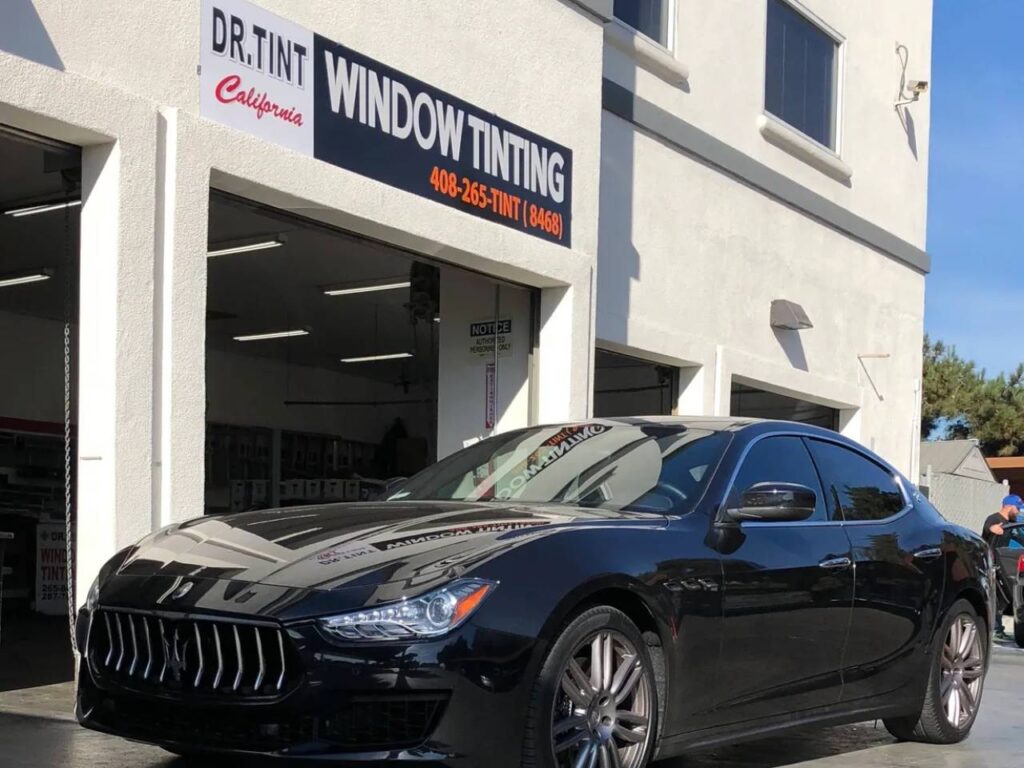
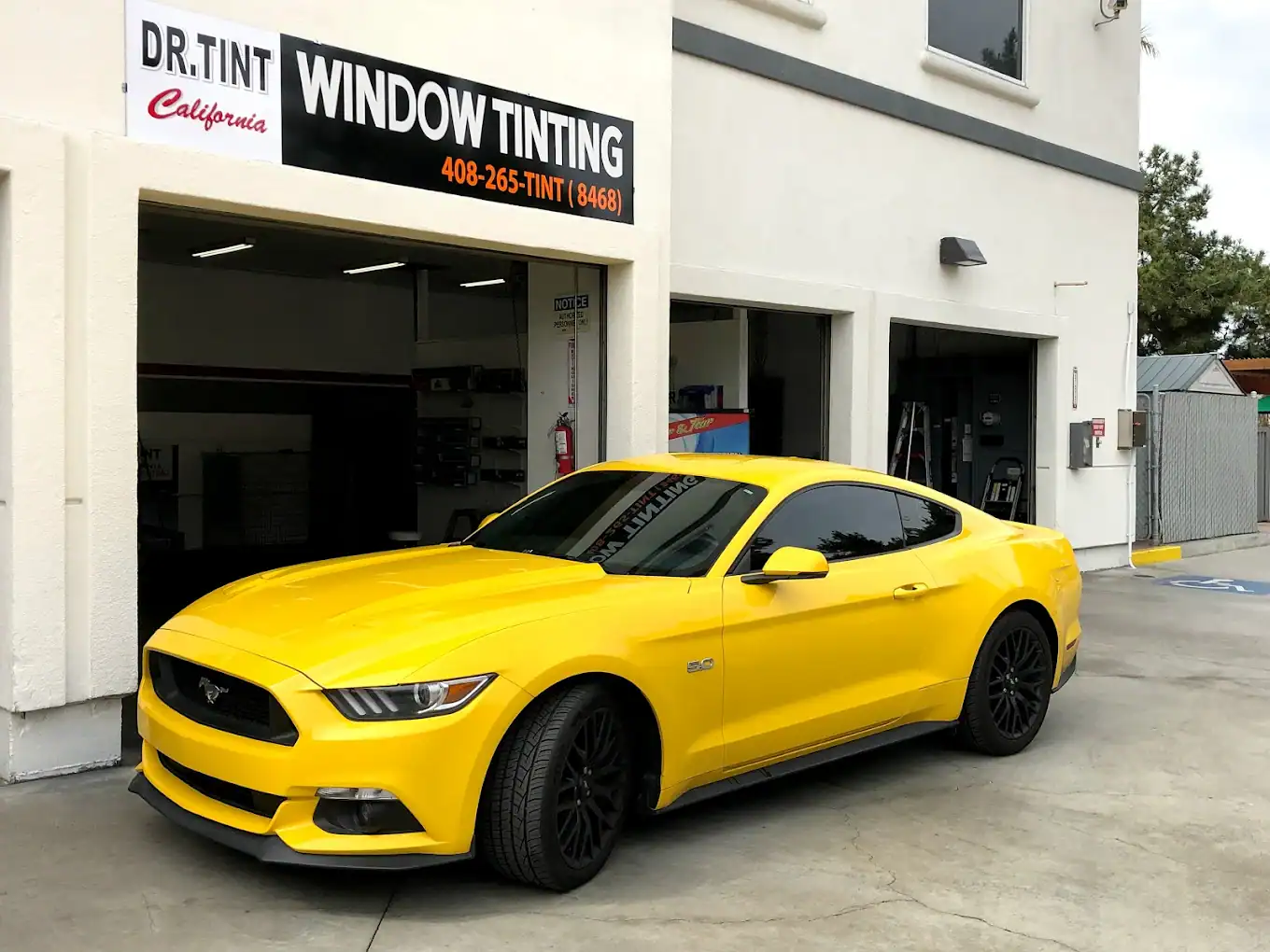
Dr. Tint California Window Tinting is known as the best window tinting in San Jose for exactly these reasons. Every install starts with thorough glass preparation, uses premium window tint products from trusted manufacturers, and is finished with clean edges and a smooth surface that meets the standards a paying customer deserves. Whether you need custom automotive window tinting services, professional residential window tint installation, or heat reduction and glare control window tint for a commercial space, the team delivers work that holds up and looks great long after installation day.
A good tint job should be nearly invisible in the best possible way. It should look clean, feel smooth, perform exactly as promised, and last for years without peeling, fading, or bubbling. Now that you know what to look for, you can inspect any install with confidence and make sure your investment was done right.
Related Post