Window tint does not announce when it stops working. There is no warning light on your dashboard, no alert on your phone, and no obvious moment when you can point to and say that is when it failed. Deterioration happens gradually, and by the time most people notice something is wrong, the film has already been performing poorly for months. This is frustrating because window film is an investment, and an investment that quietly stops delivering what you paid for is money that has been quietly wasted.
Thank you for reading this post, don't forget to subscribe!The good news is that deteriorating window tint does leave signs. You just have to know what to look for. Whether the film is on your car, your home, or a commercial building, the signs of a failing tint job share common patterns that become easy to recognize once you know what they are. This guide covers every major sign of deteriorating window tint, what each one means, and what you should do when you spot them.
What You Can See: The Visual Signs of Failing Window Film
The eyes are usually the first thing to catch a problem with window tint, and the visual signs of deterioration are worth examining carefully rather than dismissing as cosmetic issues. In most cases, what you see on the surface reflects something happening at a deeper level in the film’s structure or adhesive.
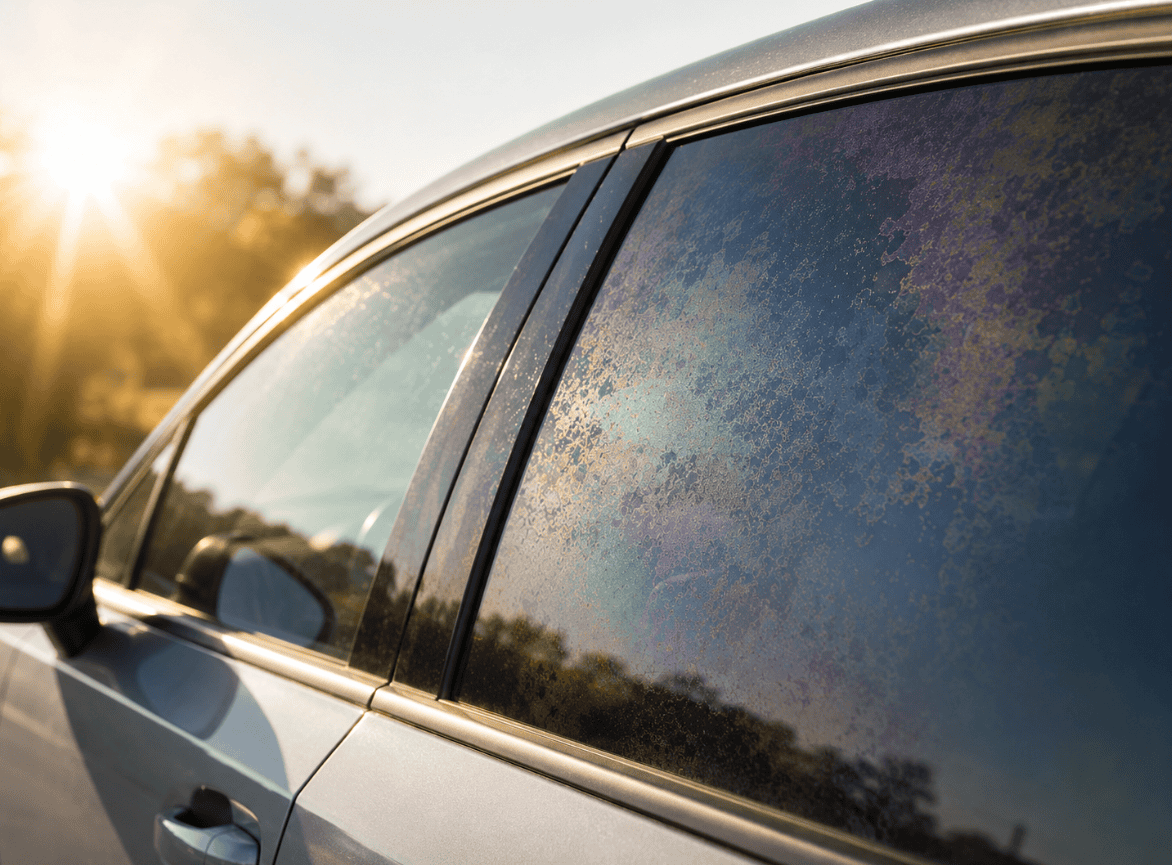
Color change is the most recognized sign of window tint deterioration, and it tells a specific story about what went wrong. Window film that starts its life as a neutral grey or charcoal shade but gradually shifts toward purple or brown is experiencing dye degradation. This happens primarily in basic dyed films where color pigments are used to achieve the tinting effect. California’s intense sun, which San Jose sees year-round, accelerates the UV-induced breakdown of these dye molecules.
As the dyes degrade, the balance of color in the film shifts, and the result is a distinctly off-color window that no longer looks right from inside or outside the vehicle or building. This is not a reversible process. The dye has been permanently altered, and the film’s ability to perform its core functions of UV protection and heat rejection has been compromised along with its appearance.
Bubbling is another highly visible sign that should never be ignored once the film’s initial curing period has passed. During the first few weeks after a professional window tinting installation, small water pockets are normal and resolve on their own as the adhesive cures. Bubbles that appear after this period, or bubbles that appeared immediately and never went away, are a different matter entirely.
These persistent bubbles indicate adhesive failure, meaning the bond between the film and the glass has broken down in those areas and air or moisture has filled the gap. Bubbles caused by adhesive failure do not resolve on their own. They grow larger over time as the compromised adhesive continues to lose its grip, and they spread outward from their original position across the glass surface.
Peeling and edge lifting are signs that the film is separating from the glass starting at its most vulnerable points. The edges of any window film installation are exposed to more mechanical stress than the center of the glass. Wind, rain, cleaning cloths, and temperature cycling all apply force to the film’s perimeter, and when the adhesive at the edges weakens, the film begins to lift and curl away from the glass.
This typically starts at corners before spreading along the bottom and side edges. A small amount of edge lifting caught early might be addressable, but in most cases it signals that the adhesive across the entire film is aging and that full replacement is the right course of action rather than attempting to reattach the lifted portions.
Scratching and surface hazing give the glass a worn, damaged appearance that affects both clarity and the film’s functional performance. Scratches on the film surface can come from abrasive cleaning materials, contact with rough surfaces, or simply years of normal use. Hazing, which appears as a dull, cloudy quality over the film surface that does not clean away, can result from chemical damage caused by ammonia-based cleaners, from repeated micro-abrasion, or from the film’s surface coating breaking down over time. Both conditions reduce how clearly you can see through the glass and affect how the film manages light, which reduces its glare reduction window film performance.
Here are the visual signs of deteriorating window tint to watch for:
- Color shift from grey or charcoal toward purple, brown, or green in any portion of the film
- Bubbles visible under the film surface that did not clear up after the initial curing period
- Lifting or peeling at the corners and edges that is spreading rather than staying contained
- Scratches across the film surface that create visible marks at certain light angles
- A hazy, milky, or dull quality across the film that is present even on a clean window
- Uneven appearance where some sections look different in shade or texture from others
Performance Signs That Show the Film Is No Longer Doing Its Job
Sometimes deteriorating window tint looks acceptable on the surface but has already lost its functional effectiveness. These performance-based signs are subtler than visual deterioration, but they are just as important to recognize because they mean you are getting none of the protection you invested in.
Increased heat inside your vehicle or home is one of the most telling performance signs. If you have had your car or home windows tinted for several years and you are noticing that your interior feels meaningfully hotter near the glass than it used to, the film’s heat reduction capability has likely declined. This happens gradually as films age, particularly with dyed products where the performance layer degrades alongside the color.
You might not notice it on any single day, but over the course of a warm California season you start to realize that the interior temperature feels different from what you experienced when the film was new. The film is no longer delivering the heat reduction window tint performance it was installed to provide.

Increased glare is another performance sign that people often attribute to other causes before connecting it to their window film. If driving into the morning or evening sun has become noticeably more uncomfortable than it was a few years ago, or if screens and monitors near home or office windows are harder to see than they used to be in the same light conditions, the film’s glare control capability has weakened. Deteriorating film loses its ability to manage light intensity as the surface becomes scratched, hazed, or as the light-absorbing or light-reflecting layers within the film break down. What used to be effective glare reduction window film becomes essentially clear glass in terms of glare management.
UV damage appearing on interior surfaces is a sign that is easy to overlook until the damage becomes obvious. If furniture near your windows, hardwood flooring, carpets, or your car’s dashboard and upholstery are showing new fading or discoloration that was not occurring before, the film’s UV protection has weakened. Quality UV protection window tint blocks up to 99 percent of UVA and UVB radiation. A deteriorating film may be blocking a fraction of that, allowing the sun’s most damaging rays to reach the surfaces and people inside the space with very little resistance. New UV damage showing up on previously protected surfaces is a clear sign that the film needs to be replaced.
Rising energy costs during comparable weather periods can also indicate that residential or commercial window film has lost its effectiveness. Energy efficient window tint works by reducing solar heat gain through glass, which lowers the demand on air conditioning systems. When that heat rejection performance drops off due to film deterioration, the cooling system works harder to maintain the same interior temperature, and the change shows up in utility bills. For businesses investing in energy efficient commercial window tinting, this performance loss has a direct financial impact that makes timely replacement more than just a comfort consideration.
What To Do When You Spot the Signs
Recognizing the signs of deteriorating window tint is the first step, but knowing what to do next determines whether you get ahead of the problem or let it compound. The right response depends on how far the deterioration has progressed and what type of film and application you are dealing with.
For film showing early signs of edge lifting or minor surface hazing, a professional assessment is worth having before deciding on full replacement. A knowledgeable installer at a top rated window tint San Jose shop can tell you whether the deterioration is localized and manageable or whether it reflects broader adhesive failure across the entire film. In most cases where deterioration is visible, replacement is the practical answer because partial repairs rarely hold long-term and the rest of the film is typically close to the same failure point.

For film showing color change, widespread bubbling, or significant peeling, replacement is the only real solution. These signs indicate that the film has reached or passed the end of its useful life, and continuing to leave it in place means accepting none of the heat, UV, or glare protection that properly functioning window tint delivers. Old, failing film also makes it harder to install new film correctly because it needs to be fully removed and the adhesive residue completely cleaned from the glass before new film can bond properly.
Dr. Tint California Window Tinting handles film replacement for vehicles, homes, and businesses throughout San Jose. Whether you are dealing with old automotive window tinting that has gone purple and bubbly, residential window tinting that has lost its heat rejection after years in the California sun, or commercial window film that is no longer contributing to your building’s energy performance, the team removes old film safely, prepares the glass correctly, and installs a quality replacement product built to last. As the best window tinting in San Jose, the process is handled from start to finish with the attention to detail that protects your investment and delivers results you can actually feel and see from day one.
Window tint that has started to deteriorate is not just an eyesore. It is a protection gap that grows wider every day the old film stays in place. Catching the signs early and acting on them is the straightforward way to keep your car, home, or business properly protected with window film that is actually doing its job.
Related Post