
Window tint has been around for decades, but the product you can get installed today looks almost nothing like what was available twenty years ago. The basic concept has stayed the same: apply a film to glass to reduce heat, block UV rays, and control light. But the technology behind how that film actually works has changed dramatically. The materials are more sophisticated, the performance numbers are higher, the films are thinner and clearer, and entirely new categories of window film have emerged that did not exist a generation ago.
Thank you for reading this post, don't forget to subscribe!For San Jose drivers, homeowners, and businesses, staying current with what window film technology can actually do means making better decisions when it is time to invest in window tinting services. This guide covers the most significant advancements in window tint technology happening right now, what each development means in practical terms, and why the gap between old-generation film and today’s best products is wider than most people realize.
Nano-Ceramic Technology and the Shift Away From Metal and Dye
The most significant advancement in window film over the past decade has been the widespread adoption and refinement of nano-ceramic technology. This shift changed what was possible in terms of combining high heat rejection with optical clarity, signal transparency, and long-term durability all in a single film product.
Earlier film technologies relied on either dye or metal to do the work of blocking solar energy. Dyed films absorbed light using color pigments that broke down over time. Metalized films reflected solar energy effectively but created interference with wireless signals. Neither approach was able to achieve both strong performance and longevity without significant tradeoffs.
Nano-ceramic films changed this by using ceramic particles at the nanoscale, one billionth of a meter, embedded within the film’s polymer layers. At this size, ceramic particles interact with infrared radiation and UV rays in a way that larger particles cannot. They block the specific wavelengths of solar energy responsible for heat and UV damage while remaining largely transparent to visible light. The result is a film that can reject up to 80 percent of solar heat and block up to 99 percent of UV radiation without being dark, without using metal, and without interfering with GPS, Wi-Fi, cellular signals, or any other wireless technology.
What has advanced most recently is the precision with which manufacturers can engineer the nanoscale ceramic layer. Earlier nano-ceramic films were impressive but still had some variation in performance consistency across the film surface. Current generation products from leading manufacturers have refined the deposition process so the ceramic particles are distributed more evenly and at more precise concentrations. This means more consistent heat rejection across the entire surface of the glass, better optical clarity with less distortion, and more predictable performance over the film’s lifespan. For San Jose automotive window tint applications, this level of precision matters because drivers notice any inconsistency in how the film looks or performs across different sections of the same window.
Spectrally Selective Films and Intelligent Solar Management
Another major advancement in window tint technology is the development and improvement of spectrally selective films. This category of film represents a fundamentally different approach to solar control compared to conventional window film.
Traditional films manage solar energy by being dark. If you block more light, you block more heat. The relationship between visible light transmission and heat rejection was essentially fixed, which meant strong heat rejection required darker glass. Spectrally selective films broke this relationship by targeting specific wavelengths of the solar spectrum rather than reducing solar energy across the board.
The sun emits energy across a wide spectrum. Visible light accounts for roughly half of solar energy. Infrared radiation, which is invisible but responsible for the heat you feel near a window, accounts for most of the rest. UV radiation sits at the other end of the spectrum and is responsible for skin damage and interior fading. Spectrally selective films are engineered to pass visible light through largely unimpeded while blocking a high percentage of infrared and UV wavelengths. This means a spectrally selective film can be nearly clear, allowing 70 percent or more of visible light through, while still rejecting 50 to 60 percent of total solar heat.
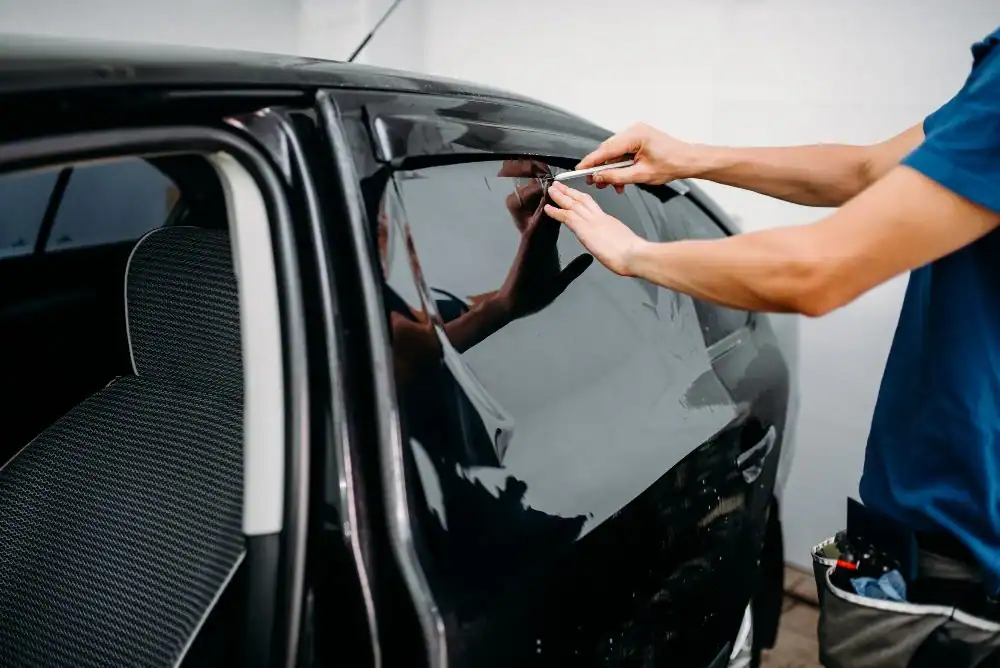
The advancement in spectrally selective technology has also pushed the performance ceiling higher. Earlier products in this category achieved moderate infrared rejection while maintaining high visible light transmission. Current generation spectrally selective films achieve meaningfully higher infrared rejection rates at the same visible light transmission levels, meaning the gap between clear and high-performing has narrowed considerably. This improvement is driven by advances in the multi-layer thin film coatings used in these products, where dozens of ultra-thin layers of different materials are deposited at the nanoscale to create specific optical properties.
Smart Glass Film, Self-Tinting Technology, and What Is Coming Next
The most forward-looking advancement in window tint technology is the development of electronically switchable and thermochromic films, often grouped under the term smart glass or dynamic window film. These products represent a departure from passive film technology into active solar management, and while they are still relatively new to the consumer market, they are advancing quickly.
Electrochromic window film changes its tint level in response to an electrical signal. In its standard state, the film is clear or lightly tinted. When a small electrical current is applied, the film darkens to reduce light and heat transmission. The tint level can often be adjusted across a range rather than just switching between two states, which allows the user to dial in the amount of light and heat reduction they want at any given time.
For commercial buildings, this technology allows solar management to respond to the position of the sun throughout the day, darkening windows on the sun-facing side of the building during peak hours and clearing when the sun moves. For residential applications, it offers the ability to tint windows for privacy or heat control without permanent darkening.
Thermochromic film takes a different approach by responding to temperature rather than electricity. These films darken automatically when the glass surface reaches a certain temperature and clear when the temperature drops. No electrical connection or user input is required. The film responds passively to the conditions it is experiencing. This makes thermochromic film particularly interesting for automotive applications and for residential or commercial windows that receive variable sun exposure throughout the day. The film provides more protection when it is most needed and less when conditions are mild.
The performance of both electrochromic and thermochromic films has improved substantially in recent years. Earlier versions had limitations in how dark they could get in their tinted state, how quickly they responded to signals or temperature changes, and how consistent the color change was across the full surface of the film. Current generation products address most of these limitations and are beginning to reach performance levels competitive with conventional passive films in their tinted state.
Dr. Tint California Window Tinting stays current with these advancements and carries products from manufacturers who are actively developing next-generation film technology. As the best window tinting in San Jose, the team brings knowledge of what today’s best films can actually do to every customer conversation, whether the application is custom automotive window tinting services for a single vehicle, professional residential window tint installation for a home with specific light and comfort goals, or energy efficient commercial window tinting for a business working to reduce cooling costs.
Window film technology has moved well beyond applying a dark layer to glass. The current generation of products manages solar energy with a precision and intelligence that was not available even a few years ago. For San Jose car owners, homeowners, and businesses that have been putting off a window film investment because they assumed the technology was the same as it used to be, the current state of the market is worth a fresh look. The improvements are real, the performance numbers are better, and the options available today make it easier than ever to find a film that fits exactly what you need.
Related Post