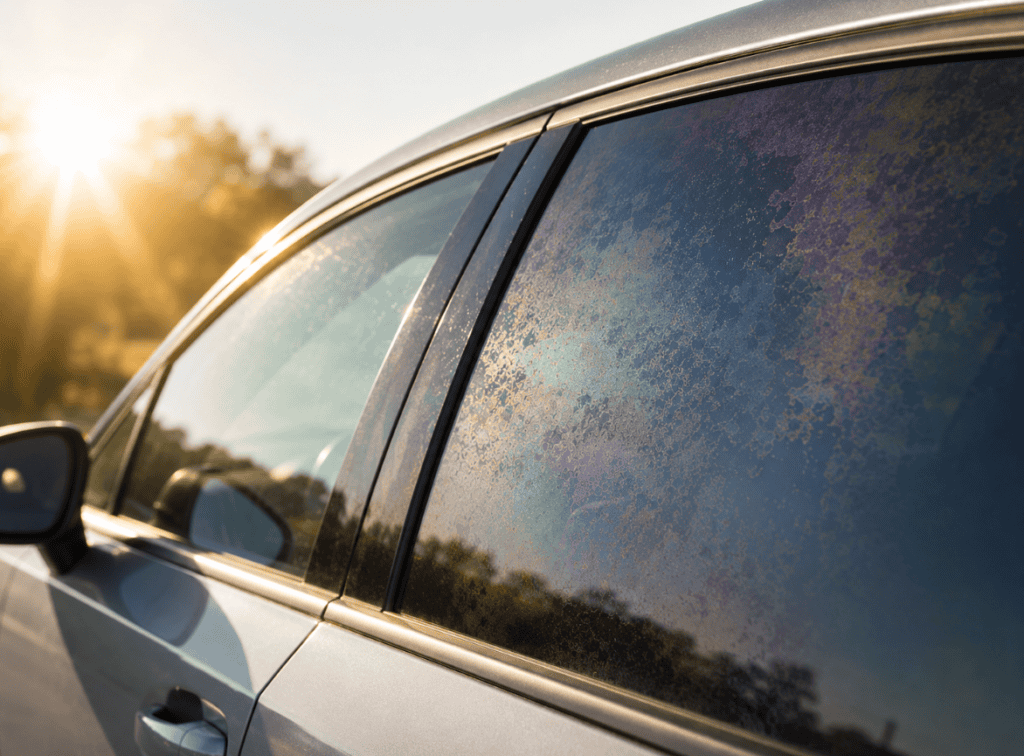
My coworker bought a used Honda from someone in Evergreen and the window tint looked fine when she bought it. About a month into ownership, she noticed small bubbles forming along the edges of the back window. Then the driver’s side started peeling at the bottom corner. She ignored it thinking maybe it would stop, but three months later the bubbles had spread across half the rear window and the peeling was getting worse every time she rolled the window down.
Thank you for reading this post, don't forget to subscribe!She finally took it for auto glass tint repair in San Jose and found out the previous owner had used cheap tint installed poorly. The shop stripped all the failing tint, properly cleaned the adhesive residue, and installed quality ceramic film with an actual warranty. Cost her a few hundred bucks but now her windows look professional instead of like they’re falling apart.
That’s the reality of auto glass tint repair – small problems don’t fix themselves, and addressing them early costs way less than waiting until the tint is completely trashed.
Common Auto Glass Tint Problems
Auto glass tint fails in predictable ways. Knowing what you’re looking at helps you understand if you need repair or full replacement.
Bubbling happens when the adhesive fails or air gets trapped between the film and glass. Small bubbles right after installation sometimes work themselves out during curing. But bubbles that appear weeks or months later signal adhesive failure.
I had bubbles appear on my old truck’s back window about two years after installation. Started as a few small bubbles near the defroster lines, spread to quarter-sized bubbles within months. The film was delaminating from the glass and only got worse.
Edge peeling is super common, especially on windows that get rolled down. The film edges weren’t properly sealed during installation, or the seal failed over time. Once edges start peeling, water and dirt get underneath making it worse.
Purple or fading tint means the dye in cheap film is breaking down from UV exposure. This is permanent degradation – the film itself is dying. No repair fixes purple tint, only replacement.
Scratches in the film come from cleaning with abrasive materials, objects rubbing the window, or sometimes from rolling windows up and down with debris in the channels. Deep scratches can’t be repaired – you’re replacing that window’s tint.
Creasing happens on curved windows when installers didn’t properly heat and stretch the film. Rear windows especially. Creases are permanent folds in the film that won’t smooth out.
Hazing or clouding makes the tint look milky or foggy. Usually means moisture got between the film and glass, or the adhesive is failing. Won’t clear up on its own.
Defroster line damage shows as bubbles or peeling along the defroster lines on rear windows. Heat from the defrosters can damage cheap film or poorly installed film over time.
Adhesive failure causes the film to separate from the glass, often sliding down inside the door when you roll the window down. I’ve seen cars where the tint literally bunched up at the bottom of the window.
Discoloration in patches or streaks indicates contamination under the film or uneven adhesive application during installation. Looks terrible and doesn’t improve.
Tint Bubble and Peel Repair Solutions
Tint bubble and peel repair depends on the extent and cause of the problem. Sometimes repair is possible, often replacement is the better answer.
Small edge peeling caught early can sometimes be re-adhered. The installer cleans the edge, applies fresh adhesive or edge sealing tape, and presses it back down. Works if the peeling is minimal and the rest of the film is adhering well.
My brother had about an inch of peeling on his passenger window. Caught it early, shop re-sealed the edge with special tape, and it held for two more years before he eventually replaced all his tint.
Isolated bubbles in small areas might be fixable by cutting out the affected section and patching it, but this only works on larger windows where a patch won’t be super obvious. Back windows sometimes allow patch repairs that would look terrible on side windows.
But honestly, most bubbling and peeling problems indicate systemic adhesive failure. Fixing one spot doesn’t address the underlying issue that the film is failing. You’re just delaying the inevitable replacement.
If bubbles are spreading or if you have multiple areas peeling, skip repairs and go straight to replacement. You’ll end up there anyway after wasting money on temporary fixes.
The age of the tint matters. If your tint is 5+ years old and starting to bubble, it’s lived its life. Time for fresh film rather than trying to repair aging material.
If bubbling happened shortly after installation – within the first few months – that’s installation failure and should be covered under warranty. Contact the installer and demand they fix their poor work.
For peeling caused by rolling windows down during the curing period, the damage is usually extensive enough that replacement makes more sense than repair attempts.
Re-tinting just the damaged window is an option if other windows are fine. No need to redo all your tint if only one window is failing.
Scratched Tint Removal and Replacement
Scratches in auto glass tint can’t be buffed out or repaired. The film material itself is damaged. Scratched tint removal and replacement is the only real fix.
Minor surface scratches that don’t go deep might be barely noticeable. If they don’t bother you, you can live with them. But they won’t disappear or improve.
Deep scratches that catch your fingernail or are clearly visible need attention. At that point you’re either living with ugly scratched tint or replacing it.
Scratches from cleaning usually happen from using paper towels or rough cloths on tinted windows. Paper towels seem harmless but they scratch tint over time. Always use soft microfiber cloths.
Scratches from objects – bags, equipment, dogs, whatever rubs against your windows – sometimes go deep enough to cut through the tint film entirely.
I know someone whose dog scratched the back window tint clawing at the glass. Deep gouges all over. No repair option, just replacement of that window’s film.
The removal process for scratched tint is standard tint removal. Steam or heat the film to soften adhesive, peel it off, clean all adhesive residue, install fresh film.
If only one window is scratched, you can replace just that window’s tint. Though if all your tint is the same age, consider replacing everything so it all matches and ages together.
Color matching can be tricky if you replace one window years after the original installation. Film manufacturers change products, and even the same film type from the same manufacturer can look slightly different if produced years apart.
Prevention is obviously better than replacement. Clean tinted windows gently with proper materials. Keep objects that might scratch away from windows. Train dogs not to claw at glass.
Some newer ceramic tints are more scratch-resistant than older dyed films. Upgrading to better film when replacing scratched tint means better durability going forward.
Purple Tint Restoration and Replacement
When tint turns purple, people often ask about restoration. The hard truth is purple tint can’t be restored to its original color. The film has permanently degraded.
Purple tint happens because the dyes in cheap film break down from UV exposure. The film literally changes color as the dye molecules degrade. This is chemical breakdown, not something you can reverse.
I see purple tint all over San Jose on older cars. It’s embarrassing and screams “cheap tint job” or “I’ve neglected my car.” Nobody wants purple windows.
The purple usually starts subtly – maybe a slight reddish or blue tint. Then it gets progressively more purple over months. Eventually it’s undeniably purple and looks terrible.
Some people try to live with it, hoping maybe it won’t get worse. It always gets worse. UV exposure continues breaking down the remaining dye until the film looks completely wrong.
The only fix is complete removal of the purple film and replacement with quality film that won’t purple.
When replacing purple tint, upgrade to ceramic or carbon film. These don’t use dyes that degrade. Ceramic film especially maintains its color indefinitely because the tinting comes from ceramic particles, not organic dyes that break down.
The removal of old purple tint is sometimes harder than removing normal tint because the degraded film can become brittle and doesn’t peel off cleanly. Extra patience required.
Make sure all adhesive residue is completely removed. Old degraded adhesive can be stubborn. Proper solvents and scraping techniques are necessary.
After seeing purple tint on enough cars, I always recommend spending extra for ceramic or at least carbon film. The cost difference over the life of the tint is minimal but you never deal with purpling.
If you’re buying a used car with purple tint, factor replacement cost into your purchase decision. You’ll definitely want it replaced soon.
Dealing with Peeling Window Tint
Peeling window tint is annoying and gets worse the longer you ignore it. Addressing it promptly prevents further damage.
Edge peeling starts in corners usually. The film wasn’t adhered properly at the edges, or the edge seal failed. Once started, it progresses as wind, water, and window movement work more of the edge loose.
Rolling windows up and down with peeling edges accelerates the problem. The film gets caught in the window channel, creating more peeling and potentially tearing.
My friend’s car had peeling on the driver’s window. Every time she rolled it down, more film peeled. Within a month, a corner peel became half the edge peeling away.
Full delamination happens when large sections of film separate from the glass. Sometimes the film stays in place just floating loose against the glass. Other times it slides down when you roll the window down.
I’ve seen cars where rolling the window down caused the tint to bunch up at the bottom like a curtain. That’s complete adhesive failure requiring full replacement.
For minor edge peeling, temporary fixes exist. You can try re-adhering the edge yourself with special adhesive or edge tape. This buys time but probably isn’t permanent.
Professional re-adhesion works better if the peeling is caught very early. The installer thoroughly cleans the edge, applies proper adhesive, and seals it correctly.
But if peeling is extensive or has been happening for a while, replacement is the right move. The adhesive has failed and repairing edges doesn’t fix the underlying problem.
When replacing peeling tint, ask the installer about edge sealing techniques. Proper edge work during installation prevents peeling problems.
Quality film with better adhesive systems is less prone to peeling. Upgrading during replacement means you probably won’t deal with peeling again for years.
Auto Window Film Restoration Services
Auto window film restoration sounds like it might salvage failing tint, but the reality is most “restoration” is actually replacement.
Some shops advertise tint restoration services. What they usually mean is they’ll remove your old failing tint and replace it with new film. That’s replacement, not restoration.
True restoration – fixing problems with existing tint – is very limited in what it can accomplish. You can’t restore faded color, can’t eliminate bubbles throughout the film, can’t repair scratches.
The best “restoration” is sometimes just thorough cleaning. What looks like tint failure might actually be dirt and residue on the surface. Professional cleaning reveals if the tint itself is actually okay.
I thought my tint was hazing once. Took it to a detail shop and they cleaned it properly. Turned out it was just buildup from years of improper cleaning. Film underneath was fine.
Re-adhering loose edges or re-sealing small peeling sections is about the extent of true restoration. And those are temporary fixes on aging tint.
For tint that’s several years old and showing multiple problems, replacement delivers better long-term results than attempted restoration.
The value in “restoration” services is experienced professionals assessing your tint and recommending the most cost-effective solution. Maybe one window needs replacement while others just need cleaning. Maybe everything needs to go.
Be wary of shops promising miracle restoration of heavily damaged tint. If your tint is purple, bubbled, and peeling, there’s no restoration – only removal and replacement with quality film.
The best restoration is prevention. Proper maintenance from the beginning – gentle cleaning, avoiding window rolling during cure periods, using quality film initially – prevents problems that would need restoration.
Finding Quality Auto Glass Tint Repair Shops
Finding good auto glass tint repair services in San Jose means looking for experience, quality materials, and proper warranties.
Shops specializing in window tinting handle repairs better than general automotive shops that do tinting as a side service. Dedicated tint shops have the expertise and materials for proper repairs.
Ask about their tint removal process. Do they steam the film off carefully or do they scrape and risk scratching glass? Proper removal technique matters enormously.
Check what film brands they use for replacements. If they’re using cheap no-name film, you’ll be back with the same problems in a year. Quality brands like 3M, Llumar, SunTek, XPEL last.
Ceramic film costs more but solves the purpling problem permanently and provides better heat rejection. If you’re replacing failed cheap tint, upgrade to ceramic.
Warranties should cover both the film and the installation. Film warranties cover fading, bubbling, peeling, and adhesion failure. Installation warranties cover workmanship issues.
Read reviews specifically about repair and removal work. “Removed my old bubbling tint and the new stuff looks perfect” – that’s what you want to see.
Ask about pricing upfront. Some shops charge for removal separate from new tint installation. Others include removal in the package price.
Get quotes from multiple shops but compare what you’re getting. Cheapest price with budget film isn’t a deal compared to slightly higher price with quality ceramic film and better warranty.
Mobile tint services exist but quality suffers. Tinting requires a clean controlled environment. Your driveway or parking lot isn’t ideal for professional results.
Check if they offer free assessments. Good shops will look at your tint and tell you honestly what needs to be done – repair or replacement, which windows, estimated cost.
Cost of Auto Glass Tint Repair vs Replacement
Understanding the cost of repair versus replacement helps you make smart decisions.
Simple edge re-adhesion might cost $50-100 per window if the problem is minor and caught early. Cheap fix but often temporary.
Removal of old tint typically costs $25-50 per window as a standalone service. Many shops include removal free when you’re getting new tint installed.
New tint installation costs vary by film quality. Basic dyed film might be $100-200 for all windows. Quality ceramic film runs $300-500 or more for the whole car.
Replacing just one or two problem windows costs less than doing the whole car obviously. Maybe $100-200 per window depending on film choice.
But if multiple windows are failing or your tint is old across the board, doing the whole car at once usually offers better per-window pricing.
Compare repair costs to replacement costs. If repairing two windows costs $150 but replacing all your aging tint costs $350, replacement is probably smarter.
The warranty value factors into cost analysis. Cheap repair with no warranty might need another repair in six months. Quality replacement with a 10-year warranty is one-and-done.
Your time has value too. Multiple trips for serial repairs of failing tint costs you time and hassle. One replacement job fixes everything.
If your car is older and you’re not keeping it much longer, minimal repair might make sense. If you’re keeping the car for years, invest in quality replacement.
Lease returns sometimes need tint repair to avoid end-of-lease charges. Cheapest fix that makes it look acceptable might be the smart play.
For newer cars or cars you’re keeping long-term, don’t cheap out. Quality film properly installed saves money over the car’s lifetime.
DIY Tint Repair vs Professional Service
Some people attempt DIY tint repair to save money. Sometimes it works, often it creates bigger problems.
Removing old tint yourself is risky. You need heat guns or steamers to soften adhesive. Too much heat cracks glass, especially on cold days. Not enough heat and the film doesn’t come off cleanly.
Razor blades on glass require steady hands and technique. It’s easy to scratch the glass if you’re not experienced. Scratched glass is way more expensive than professional tint removal.
I tried removing tint from a side window once. Broke the window trying to heat it too aggressively. The professional removal I should’ve paid for would’ve been way cheaper than replacing the glass.
Adhesive residue removal is tedious. The glue left behind after peeling film off needs solvents and scraping. Miss some and your new tint won’t adhere properly.
Installing new tint DIY is possible with pre-cut kits for your specific car model. Some people get decent results. Many end up with bubbles, crooked film, or gaps.
The learning curve is real. Your first DIY tint job probably won’t look professional. Maybe you’re okay with that on an old beater car. On a nice car, probably not worth the risk.
Rear windows are especially challenging for DIY. The curves and defroster lines require skill to tint without creases or bubbles along the lines.
If you’re determined to DIY, at least use quality film. Don’t buy the cheapest Amazon kit. Get actual brand-name film with self-adhesive properties that make installation easier.
Watch multiple installation videos from reputable sources before attempting it. Understanding the process helps but doesn’t replace experience.
Know when to stop and call professionals. If your DIY attempt is creating more problems – tears, misalignment, excessive bubbles – stop before you waste more film and time.
For simple edge resealing on minor peeling, DIY might work with proper adhesive tape. For anything more complex, professional service delivers better results.
Maintaining Repaired Auto Glass Tint
After getting auto glass tint repair or replacement, proper maintenance prevents future problems.
Don’t roll windows down for 2-3 days after new tint installation. The adhesive needs time to cure fully. Rolling windows during curing causes edge peeling.
This is hard for people to remember. I’ve seen people get fresh tint installed and roll windows down that afternoon because they forgot. Causes instant edge damage.
Clean tinted windows gently with microfiber cloths and ammonia-free glass cleaner. Paper towels scratch tint. Ammonia damages the film.
Regular cleaning prevents buildup that makes tint look bad. But clean gently – aggressive scrubbing with rough materials damages film.
Avoid using ice scrapers on tinted windows. Scraping ice off tinted rear windows risks scratching or peeling the film. Use defroster instead or gently brush snow and ice.
Be careful with objects near windows. Bags, equipment, pets – anything that rubs or scratches windows damages tint over time.
Don’t stick things to tinted windows. Suction cups, stickers, parking passes with adhesive – these can damage film when removed.
Park in shade when possible. Constant sun exposure ages tint faster. Garages or covered parking extend tint life.
Inspect edges periodically. Catching small edge peeling early allows simple resealing. Ignoring it leads to progressive failure.
If you notice any problems – bubbles forming, edges lifting, discoloration – address them promptly. Small issues caught early are cheaper to fix.
Quality tint should last 7-10 years with proper care. Budget for eventual replacement even with good maintenance. Tint doesn’t last forever.
Auto glass tint repair in San Jose fixes failing tint before it becomes an embarrassing expensive problem. Whether you need tint bubble and peel repair, scratched tint removal and replacement, or you’re dealing with purple tint that needs complete replacement, addressing problems early saves money.
My coworker’s Honda looks great now with proper ceramic tint. No more bubbles spreading across windows, no more peeling edges, no worries about it failing again because she invested in quality film with a real warranty.
If your auto glass tint is bubbling, peeling, purple, scratched, or showing any problems, don’t wait hoping it improves. It won’t. Find quality auto glass tint repair shops that use good film and know proper removal techniques. Fix it right and your windows will look perfect for years to come.
Related Post