Walk into any San Jose tint shop and you will quickly realize that window film is not a one-size-fits-all product. There are multiple types of films available, each built differently, each performing differently, and each suited to specific situations. Some people come in asking for the darkest film available. Others want maximum heat rejection without changing how their windows look. Some homeowners want UV protection without losing any natural light. The right answer depends entirely on what you are trying to achieve.
Thank you for reading this post, don't forget to subscribe!Understanding the different types of window tint films before you invest helps you make a smarter decision. It also helps you have a more productive conversation with your installer because you will know what questions to ask and what performance numbers to look for. This guide breaks down every major film type used in professional window tinting services today, covering what each one is made of, how it performs, and where it works best.
Dyed Window Film
Dyed window film is the most basic and most affordable type of window film on the market. It is made by placing a layer of dye between an adhesive layer and a protective outer coating. The dye absorbs some incoming sunlight and reduces the amount of visible light that passes through the glass, which creates the darkened appearance most people associate with window tint.
Dyed film does a reasonable job of reducing glare and improving privacy, which is why it remains a popular entry-level option. However, its heat rejection performance is limited compared to other film types. It absorbs solar energy rather than reflecting or blocking it, which means the film itself heats up and radiates some of that warmth back into the car or room. For drivers in San Jose looking for genuine heat reduction window tint performance, dyed film alone rarely delivers the results they are expecting.
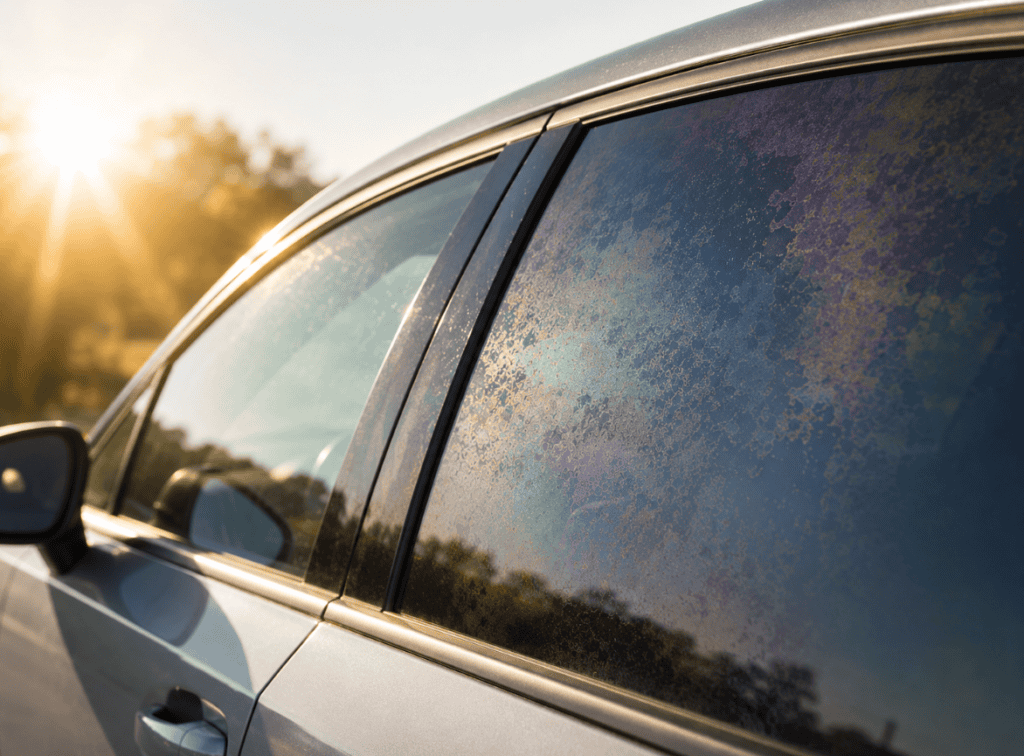
The other limitation of dyed film is longevity. Prolonged UV exposure breaks down the dye over time, causing the film to shift from its original grey or charcoal color to a purplish or brownish tint. This color change is a sign the film has degraded and needs to be replaced. In California’s intense sun, this process can happen faster than it would in milder climates. Dyed film is best suited for people who want affordable car window tinting in San Jose on a tight budget and primarily need basic privacy and glare reduction rather than maximum heat performance.
Metalized Window Film
Metalized window film takes a different approach to solar rejection. Instead of using dye to absorb light, it uses tiny metallic particles embedded in the film layer to reflect solar energy away from the glass. This reflection-based approach delivers noticeably stronger heat rejection than dyed films and gives metalized film a higher total solar energy rejected rating.
The metallic content also makes the film more durable than basic dyed options. It resists scratching better, holds its color over time, and does not degrade from UV exposure the way dye-based films do. Metalized films also tend to have a shiny or slightly reflective appearance, which some people like and others prefer to avoid depending on the application.
The main drawback of metalized window film is signal interference. The metallic particles in the film can disrupt GPS signals, cell phone reception, satellite radio, and other wireless technologies that depend on signals passing through the glass. For modern vehicles with multiple connected systems, this interference can be a real inconvenience. For this reason, many auto and residential window tint experts have shifted toward ceramic film as their premium recommendation, since it delivers comparable or better heat rejection without any signal interference.
Carbon Window Film
Carbon window film sits between metalized and ceramic on the performance scale. It uses carbon particles rather than metallic ones, which eliminates the signal interference problem that comes with metalized films. Carbon film offers strong heat rejection, good UV protection, and a clean matte appearance that many car owners prefer over the shiny look of metalized film.
One of the most appealing qualities of carbon film is its color stability. Carbon does not break down from UV exposure the way dye does, so carbon films hold their dark, neutral appearance over many years without shifting toward purple or brown. For drivers who want a long-lasting dark tint with solid performance and no signal issues, carbon film is a genuinely strong option.
Carbon film delivers heat reduction and glare control window tint performance that is meaningfully better than dyed film and competitive with mid-range metalized products. It blocks a good percentage of infrared radiation and provides UV protection that, in quality carbon films, reaches 99 percent blocking for both UVA and UVB rays. For someone looking for premium vehicle window tinting near me without stepping up to the full cost of ceramic, carbon film often hits the right balance of performance and price.
Ceramic Window Film
Ceramic window film is the highest-performing film type available in the window tinting market today. It uses nano-ceramic particles in place of dye, metal, or carbon to achieve its performance. These particles are non-conductive and non-metallic, which means ceramic film delivers outstanding heat rejection and UV protection without any of the signal interference that comes with metalized films.
The heat rejection performance of quality ceramic films is where they truly separate themselves from the competition. Top ceramic products can reject up to 80 percent of solar heat, compared to the 35 to 45 percent typical of basic dyed films. This difference is felt immediately in a car or a home. Surfaces near windows stay cooler, air conditioning systems work less hard, and the space overall feels more comfortable. For homeowners looking for the best UV protection window tint for homes, or for San Jose drivers dealing with brutal summer heat on daily commutes, ceramic film is the clear performance leader.
Ceramic films also maintain their appearance over a very long time. The nano-ceramic particles do not degrade from UV exposure, so the film holds its color and clarity for a decade or more. Combined with a manufacturer warranty that typically covers fading, peeling, and adhesive failure, ceramic film from a top rated window tint San Jose installer is a long-term investment that pays off year after year through comfort, energy savings, and interior protection.
Here is how the four main film types compare at a glance:
- Dyed film: most affordable, basic glare reduction, limited heat rejection, fades over time
- Metalized film: strong heat rejection, durable, signal interference, slightly reflective appearance
- Carbon film: no signal interference, good heat rejection, color stable, matte appearance
- Ceramic film: best heat rejection up to 80 percent, best UV blocking up to 99 percent, no signal interference, longest lifespan
Specialty Films for Specific Applications
Beyond the four main film types, there is a category of specialty films designed for specific needs that do not fit neatly into the standard performance tint conversation. These films serve important purposes for residential window tinting, commercial window tinting, and certain automotive applications.
Spectrally selective film is a near-clear product engineered to block infrared heat and UV radiation without significantly reducing visible light. It looks almost invisible on the glass but provides meaningful energy saving window tint solutions for commercial buildings and homes where maintaining natural light and an open appearance is a priority. Energy efficient commercial window tinting projects frequently use spectrally selective film on large glass facades where a dark tint would change the building’s appearance.
Safety and security film is a thicker film product designed to hold glass together on impact. It does not primarily focus on heat or UV performance, though many safety films include UV blocking as a secondary benefit. Its main purpose is to prevent glass from shattering into dangerous shards during accidents, storms, or attempted break-ins. Many commercial businesses and homeowners in San Jose use protective window film installation with safety film on ground-floor windows and entry points. Dr. Tint California Window Tinting carries safety film options for both residential and commercial applications.
Privacy and decorative film serves a different purpose again. These films are used on bathroom windows, front-facing home windows, office partitions, and retail spaces where limiting visibility from outside is the goal. They come in frosted, patterned, etched, and one-way mirror finishes. Privacy and UV protection window film in this category still blocks UV radiation and some heat, but its primary function is visual privacy rather than solar performance. For homeowners who want a clean, modern look on specific windows while keeping natural light flowing in, decorative privacy film is a practical and attractive option.
Here are the specialty film types and their primary uses:
- Spectrally selective film: near-clear appearance, strong UV and infrared blocking, ideal for commercial and residential glass where light is a priority
- Safety and security film: holds glass on impact, protects against break-ins and storm damage, secondary UV blocking benefit
- Privacy and decorative film: limits outside visibility, frosted or patterned finishes, good for bathrooms, offices, and street-facing home windows
- Anti-graffiti film: sacrificial layer that protects glass surfaces in commercial settings, easily removed and replaced if tagged or scratched
Choosing the right film from this range is not just about picking the most expensive option or the darkest shade. It is about matching the film to what you actually need from your windows. A driver who needs maximum heat rejection and UV protection for long California commutes has different needs than a homeowner who wants to protect their floors from fading without changing how bright their living room feels.
Dr. Tint California Window Tinting works with customers across San Jose to find the right film for every application. Whether you need custom automotive window tinting services for your vehicle, professional residential window tint installation for your home, or energy efficient commercial window tinting for your business, the team carries all major film types and installs them with the precision and care that a quality job demands. As the best window tinting in San Jose, the team is ready to help you understand your options and make a decision you will be satisfied with for years to come.
Related Post