Buying window tint is not like buying a pair of shoes where you can feel the quality in your hands before you pay. Most people walk into a San Jose tint shop, hear a few product names they do not recognize, see a shade chart, and pick a darkness level based on how it looks. The actual film goes on the glass and you trust that what you paid for is what you got. The problem is that the window tinting market has a wide range of film quality, and the difference between a film that lasts twelve years and one that starts failing in three is not always obvious at the point of purchase.
Thank you for reading this post, don't forget to subscribe!Knowing how to identify a high-quality tint film before it goes on your glass puts you in a much stronger position as a customer. It helps you ask the right questions, understand what the numbers and certifications actually mean, and spot the difference between a product worth investing in and one that looks fine on a sample card but disappoints in real-world use. This guide gives you a practical, honest breakdown of what separates quality film from the rest.
What the Specs Actually Tell You and How to Read Them
Every window film product comes with performance specifications, but most people never ask to see them. These numbers are where the real story of a film’s quality lives, and understanding a few key figures gives you a much clearer picture of what you are actually buying than any sales pitch will.
Total Solar Energy Rejected, or TSER, is the single most useful number for judging heat rejection performance. It represents the percentage of all solar energy, including infrared, visible light, and UV, that the film prevents from passing through the glass. A basic dyed film might have a TSER of 35 to 40 percent. A quality ceramic film from a reputable manufacturer can hit 60 to 80 percent or higher. When an installer describes their film as having strong heat reduction window tint performance, ask for the TSER number. A vague answer or an inability to provide the figure is a signal worth paying attention to.
Infrared rejection is a separate figure that specifically measures how well the film blocks infrared radiation, which is the invisible wavelength most responsible for heat buildup inside a car or room. Some films achieve a moderate overall TSER but have lower infrared rejection, which means they block some solar energy but not the portion that most affects interior temperature. High-quality energy efficient window tint will show both a strong TSER and a high infrared rejection percentage, often listed separately as IR rejection at specific wavelengths like 900nm or 1000nm. Films that block 95 percent or more of infrared at key wavelengths are performing at a genuinely high level.
UV rejection is another number that should appear in any quality film’s specification sheet. A high-quality UV protection window tint will show 99 percent or higher rejection of both UVA and UVB radiation. This figure is relatively consistent across most quality films regardless of type because UV blocking is achievable even in clear films without dark shading. If a film cannot confirm 99 percent UV rejection with documentation, that is a gap worth questioning.
Visible light transmission, or VLT, tells you what percentage of visible light passes through the film. This number directly determines how dark the film appears. Lower VLT means darker glass. In California, front side windows on vehicles must maintain at least 70 percent VLT. Any installer selling you a darker film for your front windows without discussing this requirement is either uninformed or cutting corners on compliance.
Here are the key specs to ask for before choosing any window film:
- TSER percentage, with quality films showing 55 percent or higher for meaningful heat control
- Infrared rejection percentage at specific wavelengths, with strong films reaching 95 percent or above
- UV rejection percentage, with quality films confirming 99 percent blocking
- VLT percentage matched to your vehicle or property and California legal requirements
- Manufacturer name and product line so you can research the film independently
How to Evaluate Film Quality Beyond the Numbers
Specifications matter, but they are not the only way to judge a film. Some qualities of high-grade window film show up in how it looks, how it feels on the sample card, and what it does in real conditions that you can observe with your own eyes.
Optical clarity is one of the clearest indicators of film quality. Hold a sample of the film up to the light and look through it. A high-quality film should be perfectly clear without any distortion, waviness, or haziness. Inferior films sometimes have a slightly wavy or rippled look when you look through them at an angle, which shows up even more obviously once they are installed on glass. Premium window tint used by top window tint specialists in San Jose delivers optical clarity that does not distort your view regardless of the angle you are looking from.
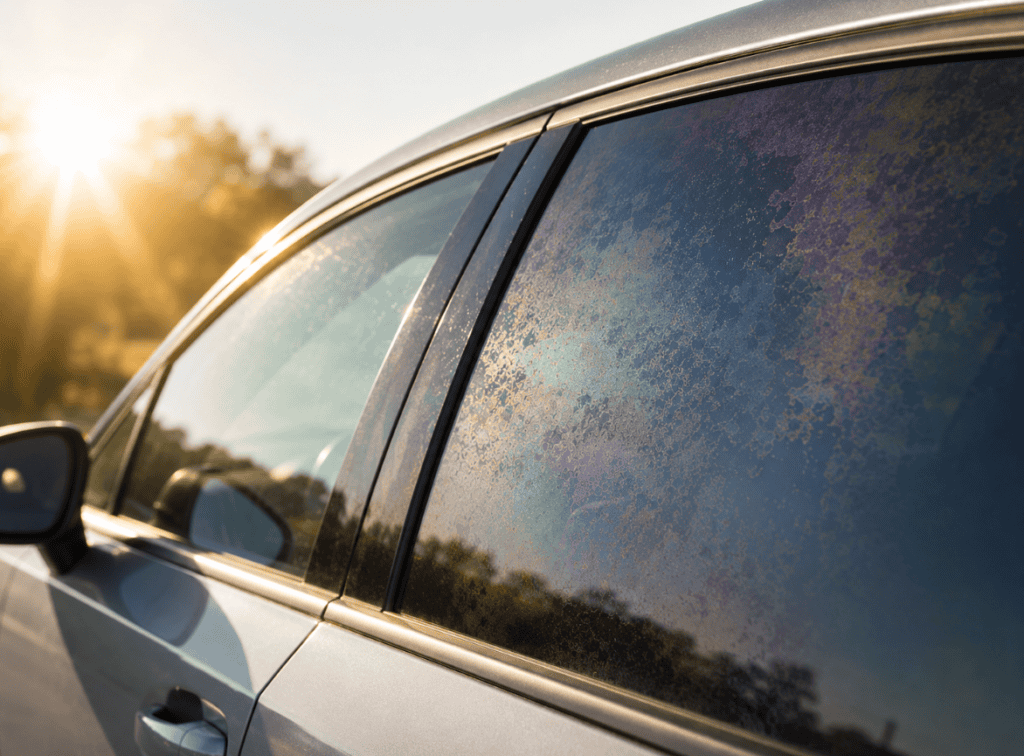
Color stability is another quality indicator that you cannot test in the moment but can research. Ask the installer whether the film uses dye, carbon, or ceramic technology. Dyed films shift in color over time when exposed to UV radiation, eventually turning purple or brown. Carbon and ceramic films maintain their original color because they do not rely on dye. Any film that cannot confirm its color stability or that is described vaguely as a basic tint film without specifying its technology is likely a dyed product with a limited lifespan.
The adhesive quality of a film is something even experienced buyers rarely think to ask about, but it matters significantly for long-term performance. A low-grade adhesive yellows over time, changes the apparent color of the film, and loses its bond to the glass more quickly than a high-quality pressure-sensitive adhesive. Ask the installer how the adhesive in their film is rated and how it performs in high-heat conditions. Quality films use adhesives that remain stable across a wide temperature range, which matters in California where car interiors can reach extreme temperatures in direct sun.
Film thickness is worth understanding in the context of what it means for different applications. Standard automotive window tinting films are typically between 1 mil and 2 mil thick. Thicker safety and security films can reach 4 mil to 14 mil. For standard heat and UV protection, a well-constructed thin film from quality materials outperforms a thick film made from inferior ones. Thickness alone is not a quality indicator, but it helps you understand whether the film is appropriate for the application.
What Manufacturer Reputation and Warranties Reveal About Film Quality
A film’s quality is also reflected in who made it and what the manufacturer is willing to guarantee. This is one of the most practical ways to assess quality without needing technical expertise, and it is information that any reputable installer can provide immediately.
Established film manufacturers who have been in the market for many years have built their reputations through consistent product performance and backed it up with real warranty programs. Their films have been tested in independent laboratories, certified by recognized standards bodies, and used by professional installers across millions of installations. When an installer uses film from a brand with no recognizable history, no verifiable certifications, and no meaningful warranty, the risk falls entirely on the customer.
Ask specifically about the manufacturer warranty that comes with the film. A quality window film warranty covers fading, color change, bubbling, peeling, adhesive failure, and delamination for a defined period. For residential and commercial applications, quality warranties typically run ten years or more. For automotive applications, strong film warranties often cover the film for the life of the vehicle or for a fixed period of five to ten years. A warranty that is vague, limited to one or two years, or difficult to get in writing is not a strong sign.
Installation warranty is a separate matter. The film warranty covers the product. The installation warranty covers the labor and the application itself. At Dr. Tint California Window Tinting, every installation is backed by both, because the team is confident in the film products they use and the quality of the work they put into every job. As the best window tinting in San Jose, the combination of product quality and professional application is what makes the difference between film that lasts and film that fails.
A few other ways to gauge film and installer quality before committing:
- Ask to see the manufacturer’s technical data sheet for the specific film being offered
- Look for film brands that are certified by the International Window Film Association or similar bodies
- Request to see examples of completed installations on vehicles or properties similar to yours
- Verify that the installer can explain what each film type does and why they are recommending a specific product for your situation
- Check whether the installer registers your warranty with the manufacturer after installation, which protects you if the film fails
High-quality window film protects better, lasts longer, and looks cleaner than cheap alternatives. It delivers real UV protection window tint performance, genuine heat reduction, and optical clarity that holds up for years. The specs, the technology, the manufacturer reputation, and the warranty together give you a complete picture that makes the decision much less of a gamble.
Whether you need custom automotive window tinting services for your vehicle, professional residential window tint installation for your home, or energy efficient commercial window tinting for your business, Dr. Tint California Window Tinting brings both the right product and the right process to every job. Knowing how to identify quality film makes you a more informed customer, and informed customers always get better results.
Related Post